Having farmed on a small scale for over 5 years, I recommend The Market Gardener as the best book for beginning gardeners and farmers. Even if you only have a backyard garden, you’ll learn so much from experienced farmer and author Jean-Martin Fortier. You’ll be inspired and encouraged when you see how much you can grow in a small garden. If you’ve been gardening a while, this book will give you many new ideas and help set a direction for excellence. If you love to garden but lament that it could never be a full time occupation, this is the book for you. A couple on just over an acre, with some part time help can make a comfortable income with these methods. It won’t be easy or immediate but it’s definitely possible.
This book explains the whole process – finding a market for your produce, selecting and preparing your site, minimizing costs, fertilizing, dealing with pest and weeds, harvesting, storage, and so on. We will adopt the book’s methods little by little over the seasons. You can do the same. Even starting with a small plot and hand tools, you can plan your way forward to more production, better soil, more nutritious produce, and a larger market. The world needs many more local, sustainable, profitable small farms and this book will be a great help to anyone interested in the field. Our farm received a free review copy of the book from the publisher. So impressed with the book, we bought another copy to give to a young, aspiring farmer who helps with our market garden.
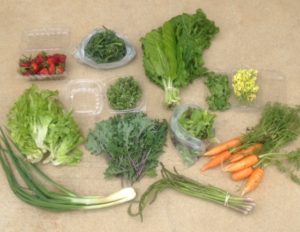
Full Share Week 2 – Top: Lettuce Asparagus Shallots Chard Cauliflower Broccoli Thyme, Bottom: Parsley, Strawberries (boxed), 2 types of Kale
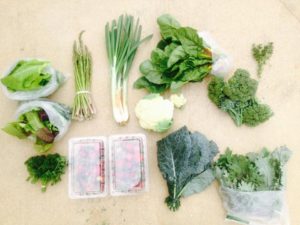
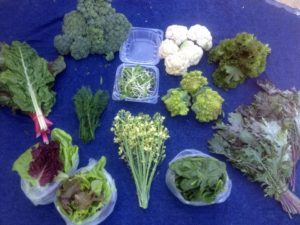
Spring Week 3 Full Share: broccoli, white and green cauliflower, lettuce, sunflower Microgreens, rainbow chard, kale, dill, mustard greens, broccoli flowers, spinach
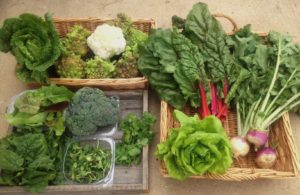
Week 4 Full Share clockwise from upper left: Chinese/Napa Cabbage, Cauliflower (white and green/Veronica), Rainbow Swiss Chard, Turnips, Head Lettuce, Cilantro, Broccoli, Microgreens/Sprouts, Leaf Lettuce, Spinach
Spring Week 5
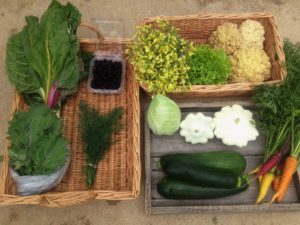
Full Share, clockwise from top left, Swiss Chard, Dewberries, Broccoli flowers, Lettuce, Cauliflower, Cabbage, Summer Squash, Carrots, Zucchini, Dill, Kale
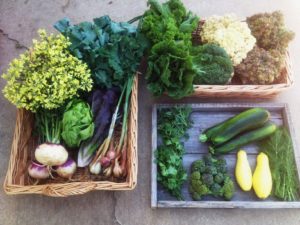
Spring Week 7 Full Share, clockwise from top left, carrots, kale, lettuce, cabbage, turnips, rainbow Swiss chard, beans, cilantro flowers, garllic, cauliflower, dill, shallots, cucumbers, squash.
Spring Week 8
Blessing Falls CSA Week 9 Full Share
Week 10 Full Share
Week 11 Full Share
Blessing Falls Spring CSA Week 12 Full Share
Summer Week 1
Summer CSA Week 2 Full Share
Summer Week 3
Summer Week 4
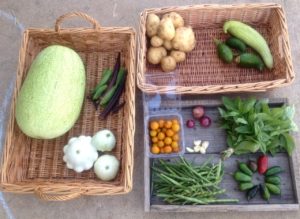
Blessing Falls Summer CSA Week 5, Full Share
Summer CSA Week 6 Share
Blessing Falls Summer Week 7 Share
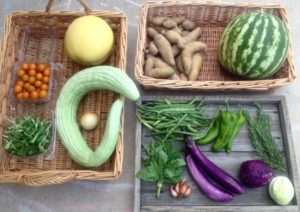
Blessing Falls Summer Week 8 Share
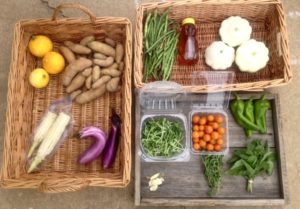
Blessing Falls Summer CSA, Week 9 Share
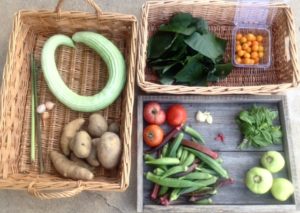
Blessing Falls Farm CSA Full Share, Summer Week 10
Blessing Falls Farm – Fall CSA Full Size Farm Share, Week 1
Fall Season Week 2 -Blessing Falls Farm Share
Blessing Falls – Week 3 Fall Farm Share
Fall Season Week 4 CSA Share – Blessing Falls Farm
Fall Season CSA Week 5 – Full Share from Blessing Falls Farm
Blessing Falls Farm – Week 6 Fall CSA Full Farm Share
Blessing Falls, Week 7 Fall CSA Farm Share
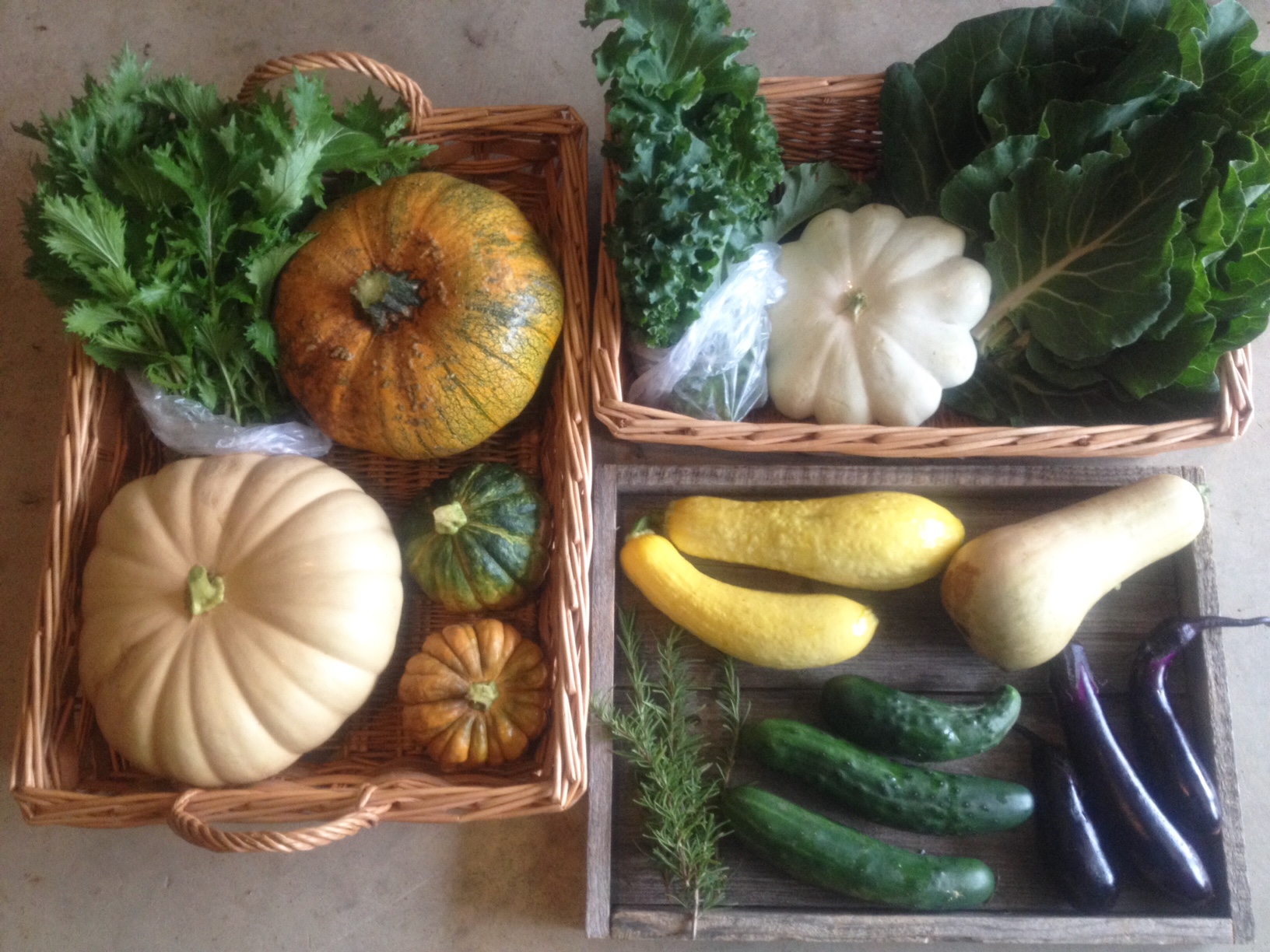
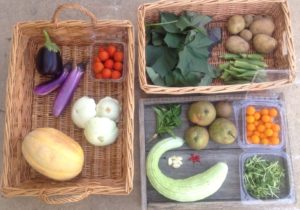
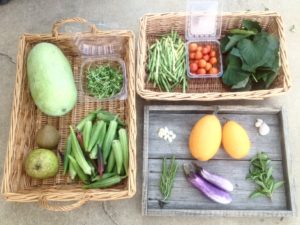
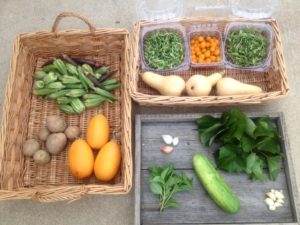
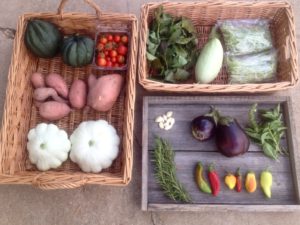
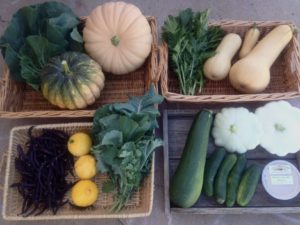
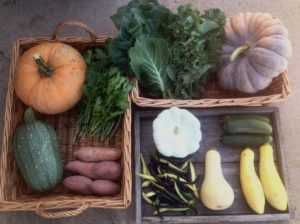
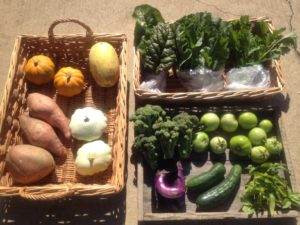
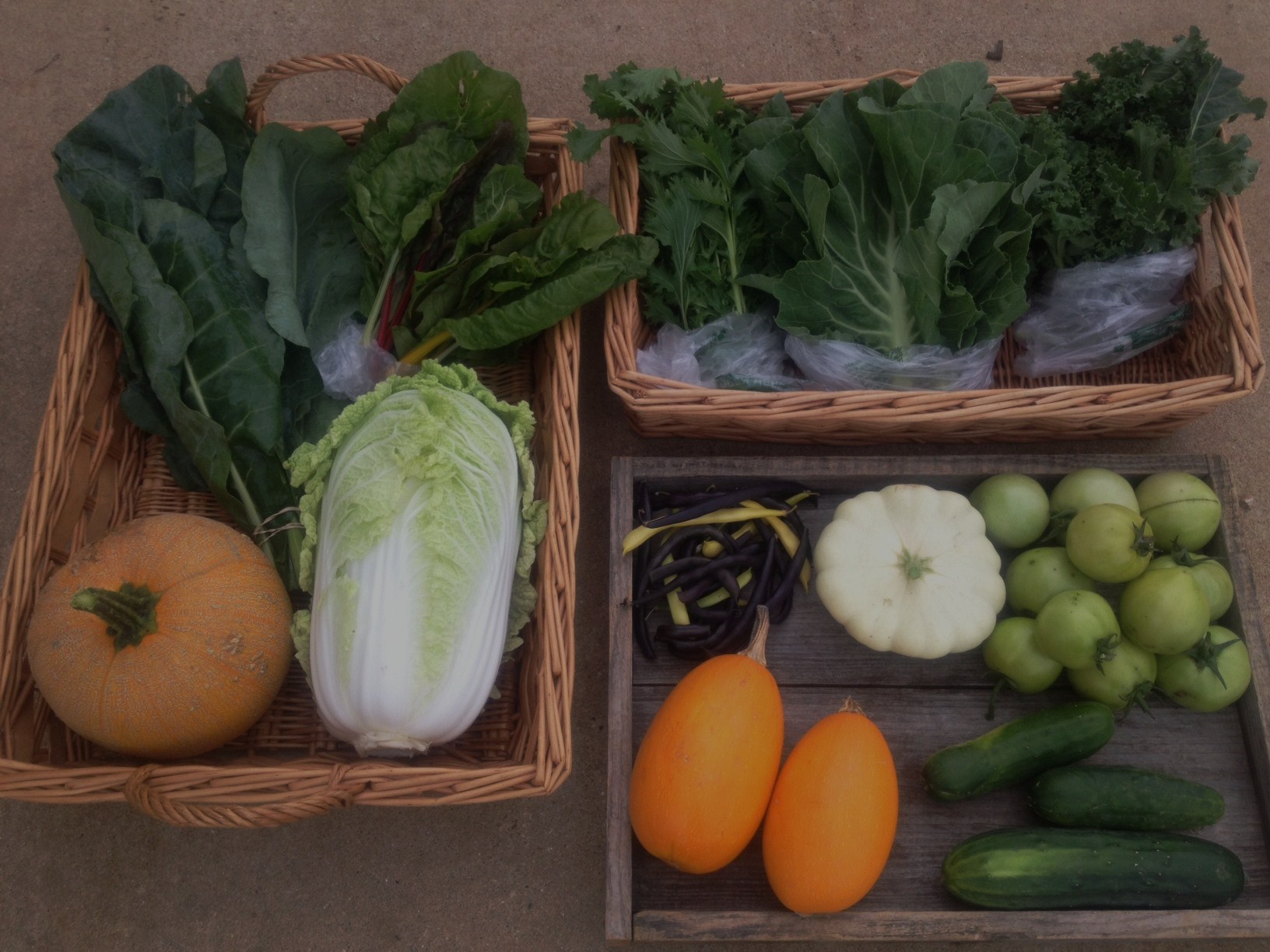
Blessing Falls Farm Weekly Share – Fall Season Week 8. (clockwise from top left) Winter luxury pie pumpkin, mixed yellow, purple and green beans, Portuguese kale, yellow squash, ping tung eggplant, dwarf Siberian kale, sweet potatoes, white scallop squash, cucumbers, spaghetti squash, Mizuna, zucchini
Fall Season CSA – Week 9 Full Farm Share
Fall CSA Week 10 – Full Share, Blessing Falls Farm
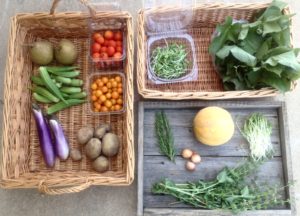
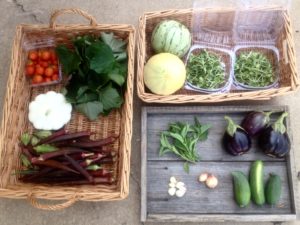
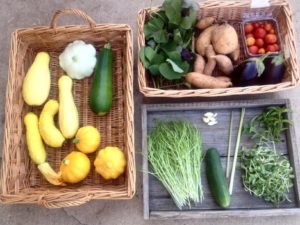
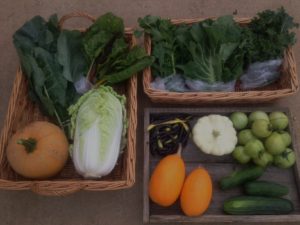
Blessing Falls Farm – Fall CSA Season Farm Share, week 11. Clockwise from top left: Romanesco greens, rainbow chard, Mizuna, Portuguese kale, curly kale, green tomatoes, cucumbers, spaghetti squash, scallop squash, beans, Chinese cabbage, pie pumpkin
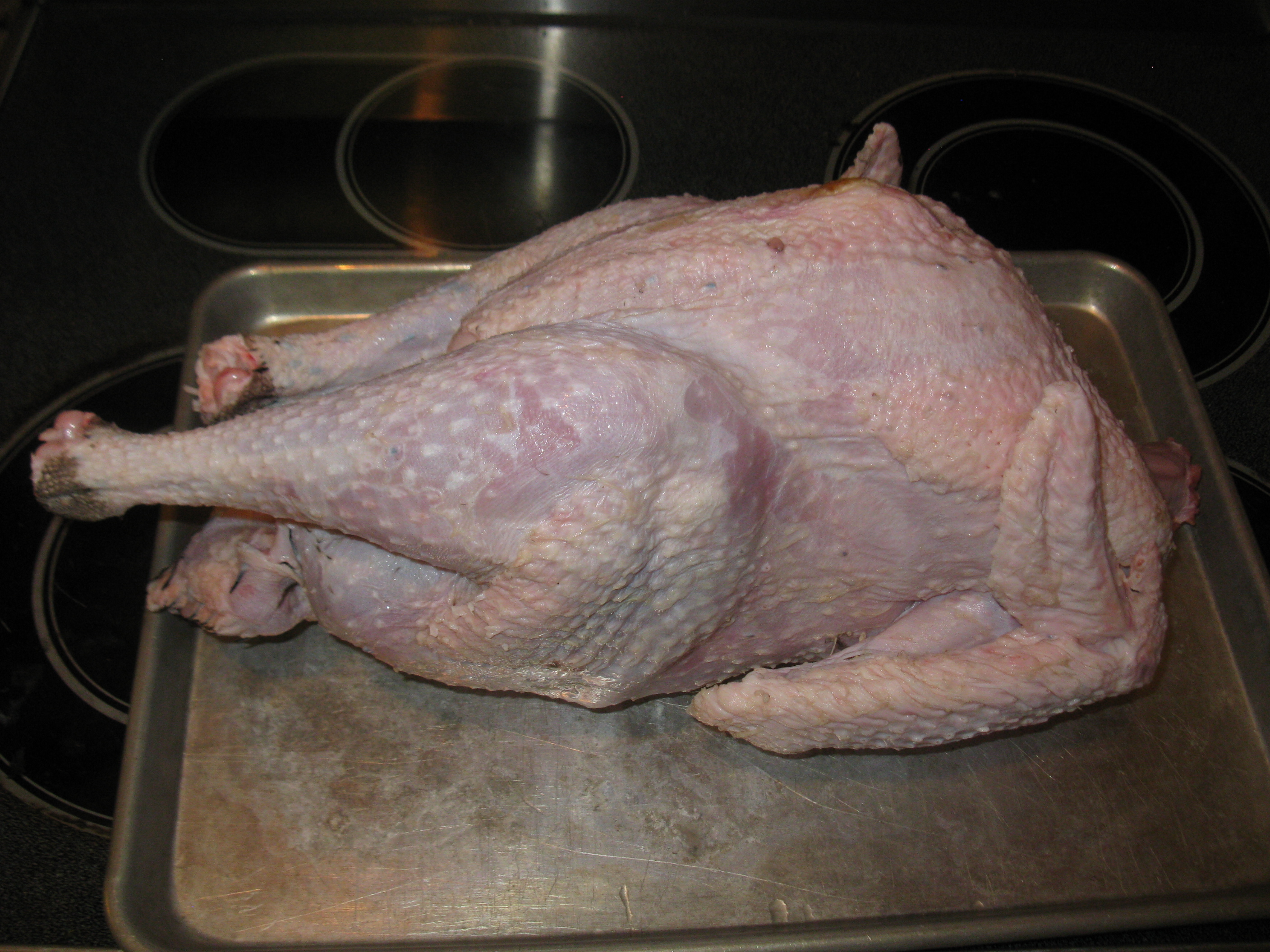
This heritage turkey, hatched and raised on our farm, weighed just over 11 pounds after cleaning. The turkey was wrapped and chilled in the refrigerator for a day before we started the preparation process. Many will soak turkey in a brine for 24 hours. We decided to rub the bird with moderate amounts of kosher salt and leave it unwrapped in the refrigerator overnight. The next day we set it on the counter several hours before cooking, so it could come up toward room temperature. We then lightly basted it with vegetable oil and rubbed in a mixture of 1/3 Lawry’s Seasoned Salt, 1/3 Adam’s Dry Rub, 1/6 kosher salt, 1/6 black pepper. Again, moderate amounts, not caked on, applied just 30 minutes before going on the smoker. For our 11 pound turkey, we used 6 teaspoons total of the rub mix. We stuffed it about half full with quartered onion, apple, and some garlic.
Next day, rub with kosher salt 24 hours before smoking. The salt will dry the skin and make the coloring irregular. This is normal – it will still be very tender and moist after smoking and roasting.
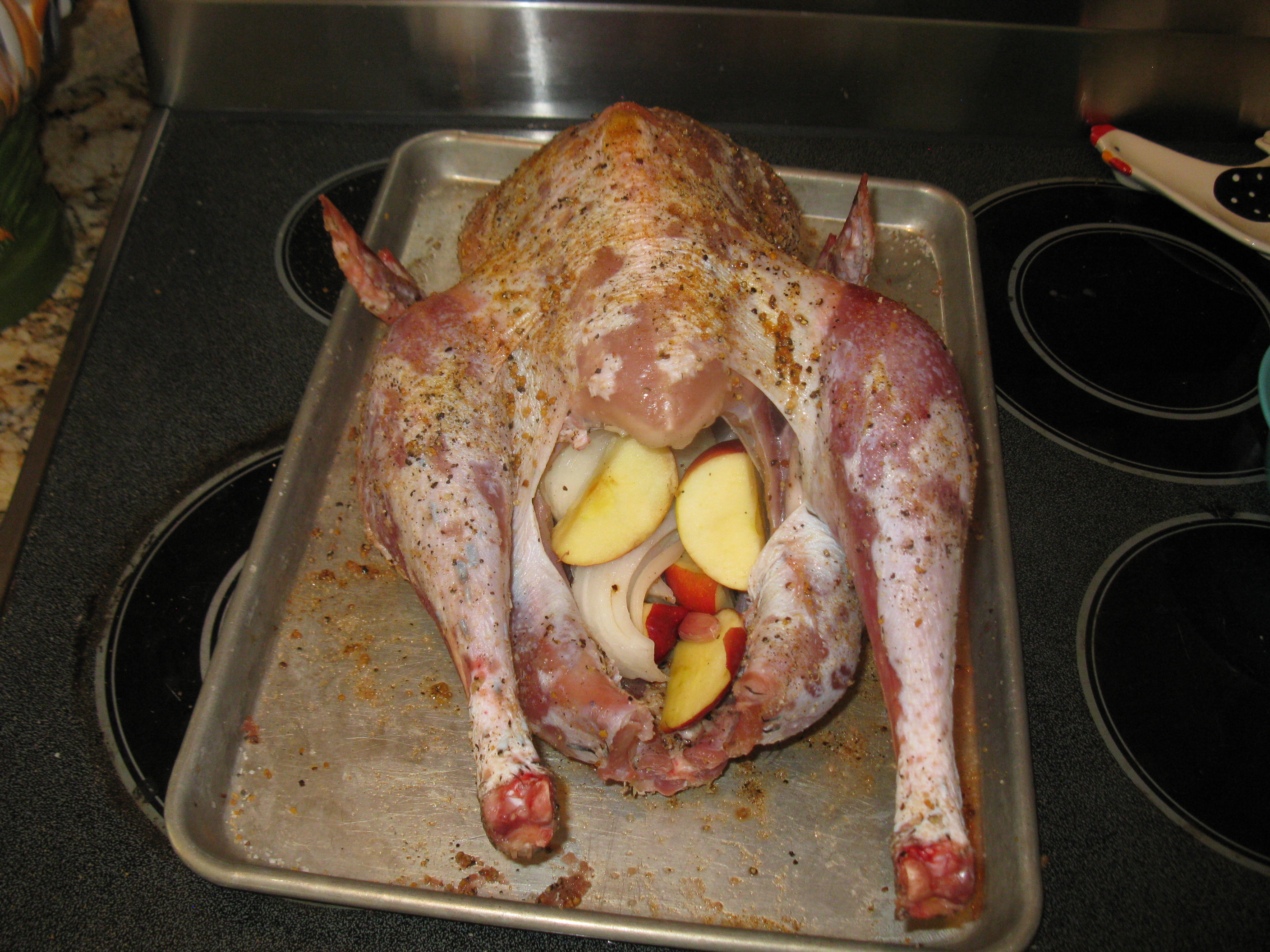
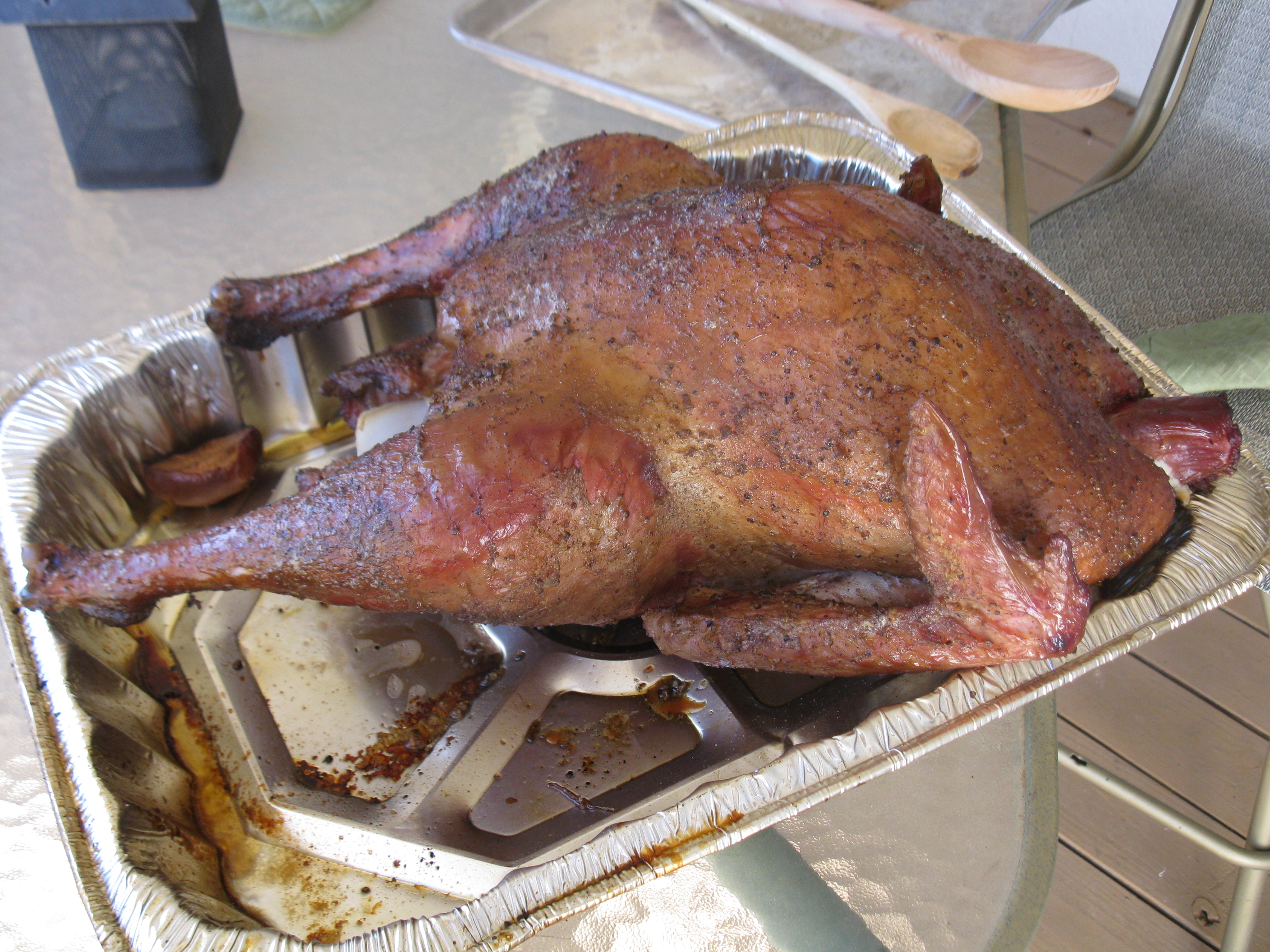
Day of smoking, rub with Lawry’s Seasoned Salt, Adam’s Dry Rub, Black Pepper and a little more Kosher salt. Moderate amounts of seasoning, you can see the bird is not coated heavily. Stuff with quartered large onion, apple, and 10 segments of garlic. Leave room in cavity for air. Note the darker color on the drumstick – this is from the 24 hours of salting and is completely normal.
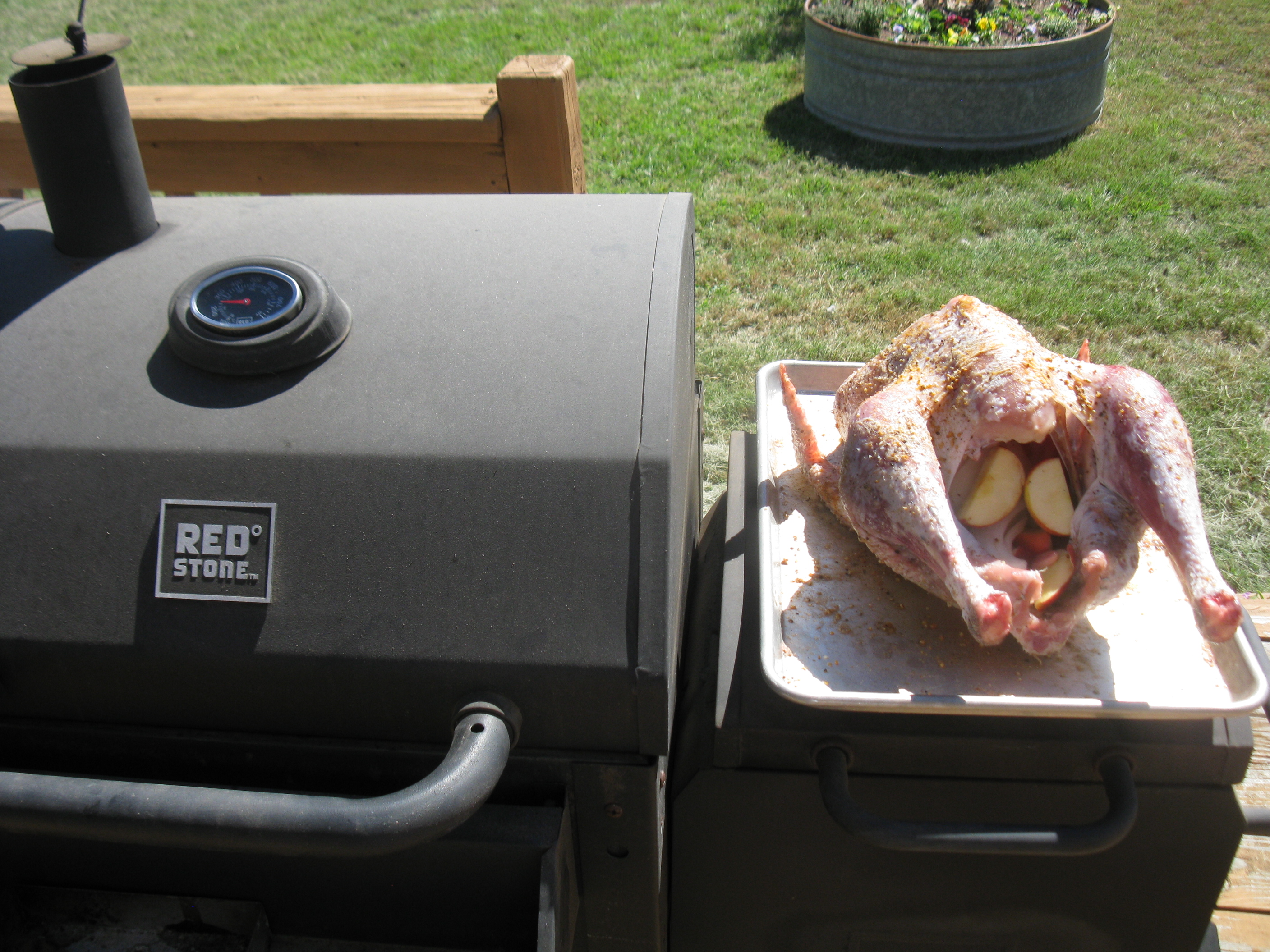
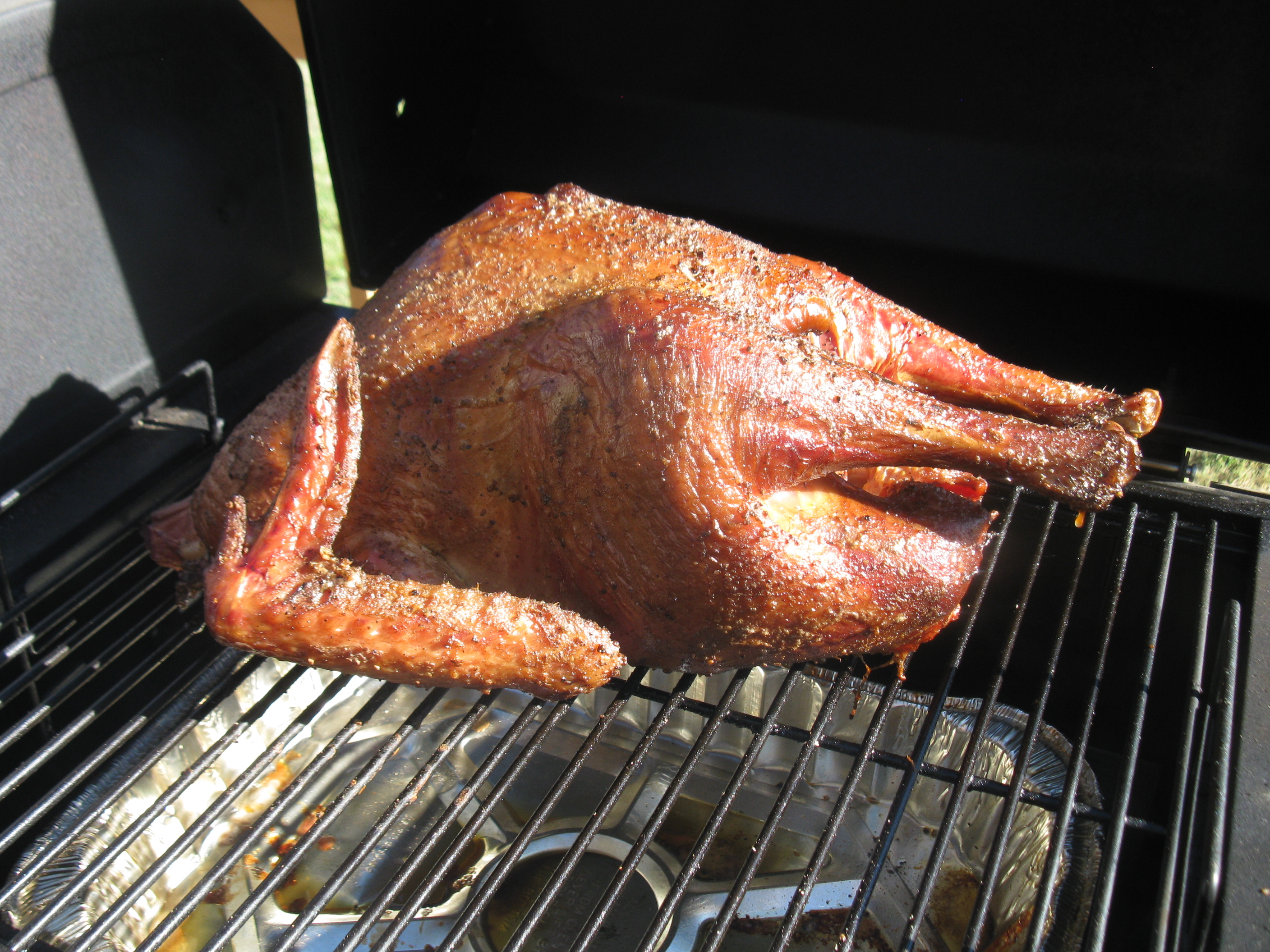
Before applying the rub, start the fire in your smoker. We use post oak in the offset fire box, letting it burn down to white coals which should give you a grill temperature of around 250 degrees. After the bird is on the grill, baste it lightly again with vegetable oil. As it smokes, watch the temperature and add wood when the temperature gets to 200. That should get it back up to around 250. Our temp fluctuated within this range, as we added wood every 15 minutes or so. The changing temperature was OK, as the bird turned out golden brown, juicy, and very tender yet not mushy.
The smoker is at 300, with fire in the offset firebox. Temp will drop to 240 when bird is put on. Will keep it between 200 and 250 for 2 hours, only opening the lid if the temp gets near 300 to let some heat out.
Here’s the result 2 hours later. The internal temperature was 135. We put it in a roasting pan and covered with foil and baked it in the kitchen oven, 325 degrees.
After 2 hours on the smoker, a perfect golden brown
After 2 hours on the smoker, stuffing has cooked down some.
In the roasting pan, just before going to the oven.
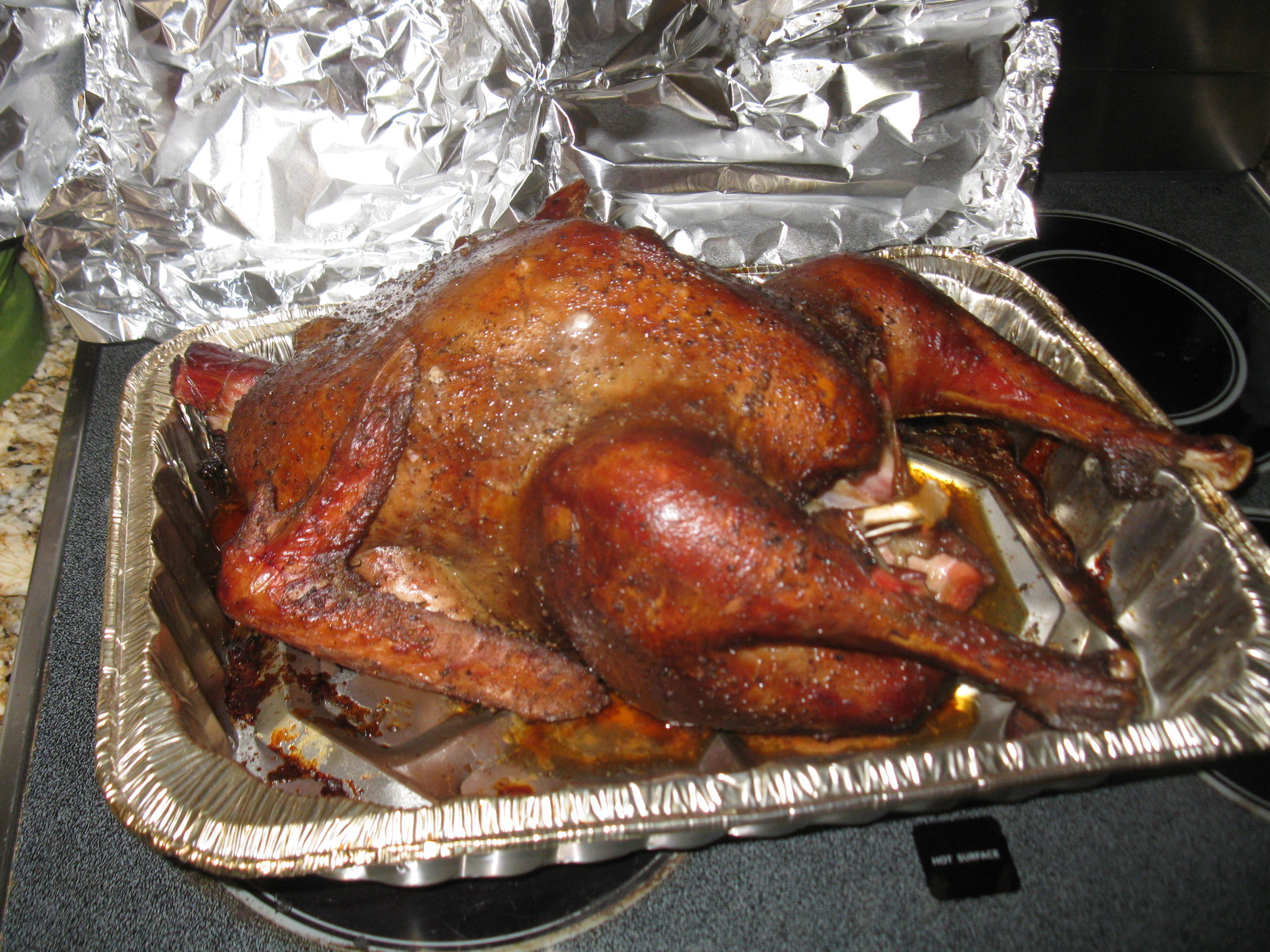
After 90 minutes in the oven, the internal temperature was 155. We left the thermometer in and put the bird back in the oven. About 20 minutes later, it reached 165 we turned off the oven. After another 20 minutes we took it out, checked the temp in various places and found it at 170. (165 is the USDA recommended minimum internal temperature.)
Fully smoked and roasted, ready to carve
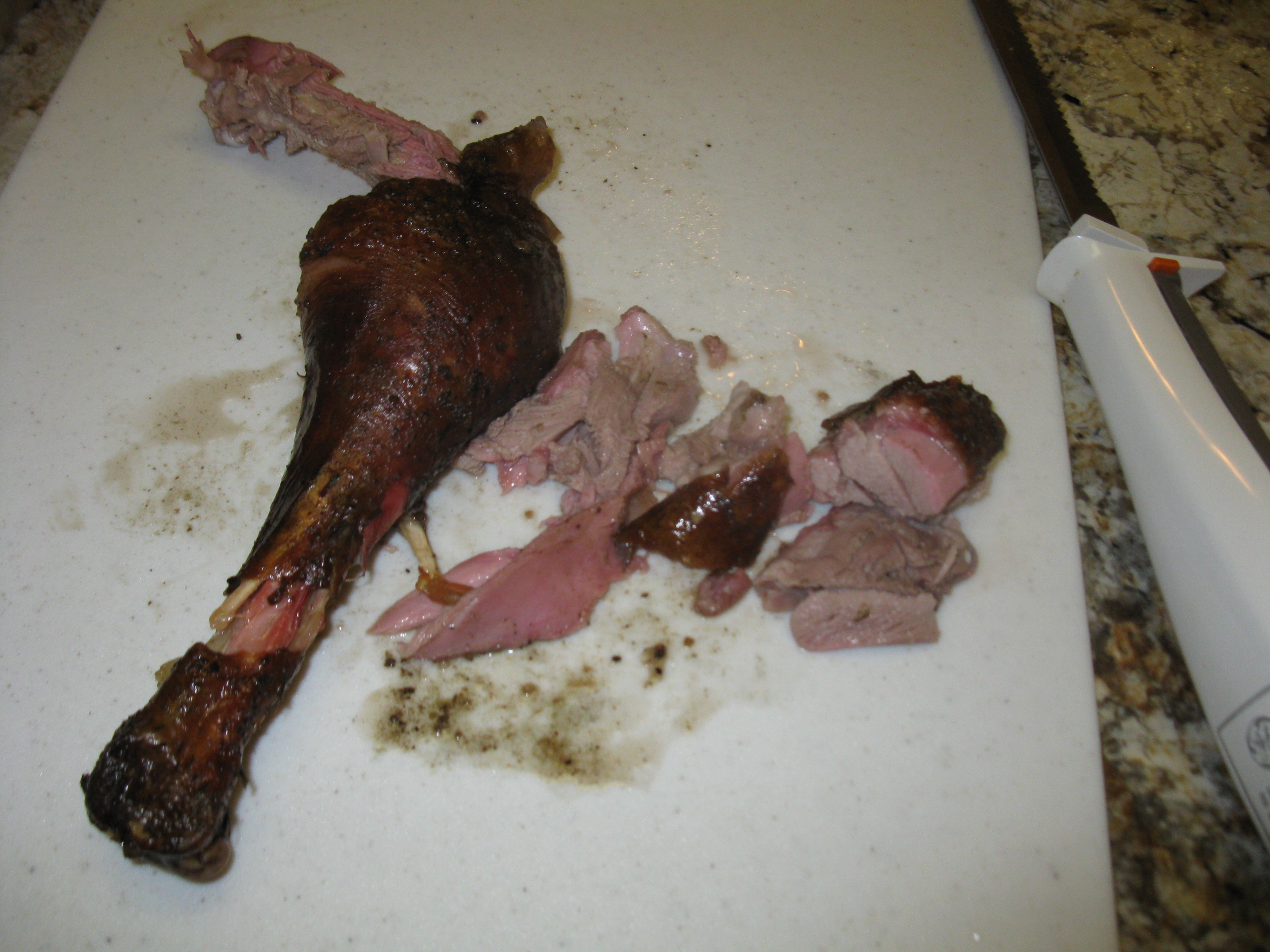
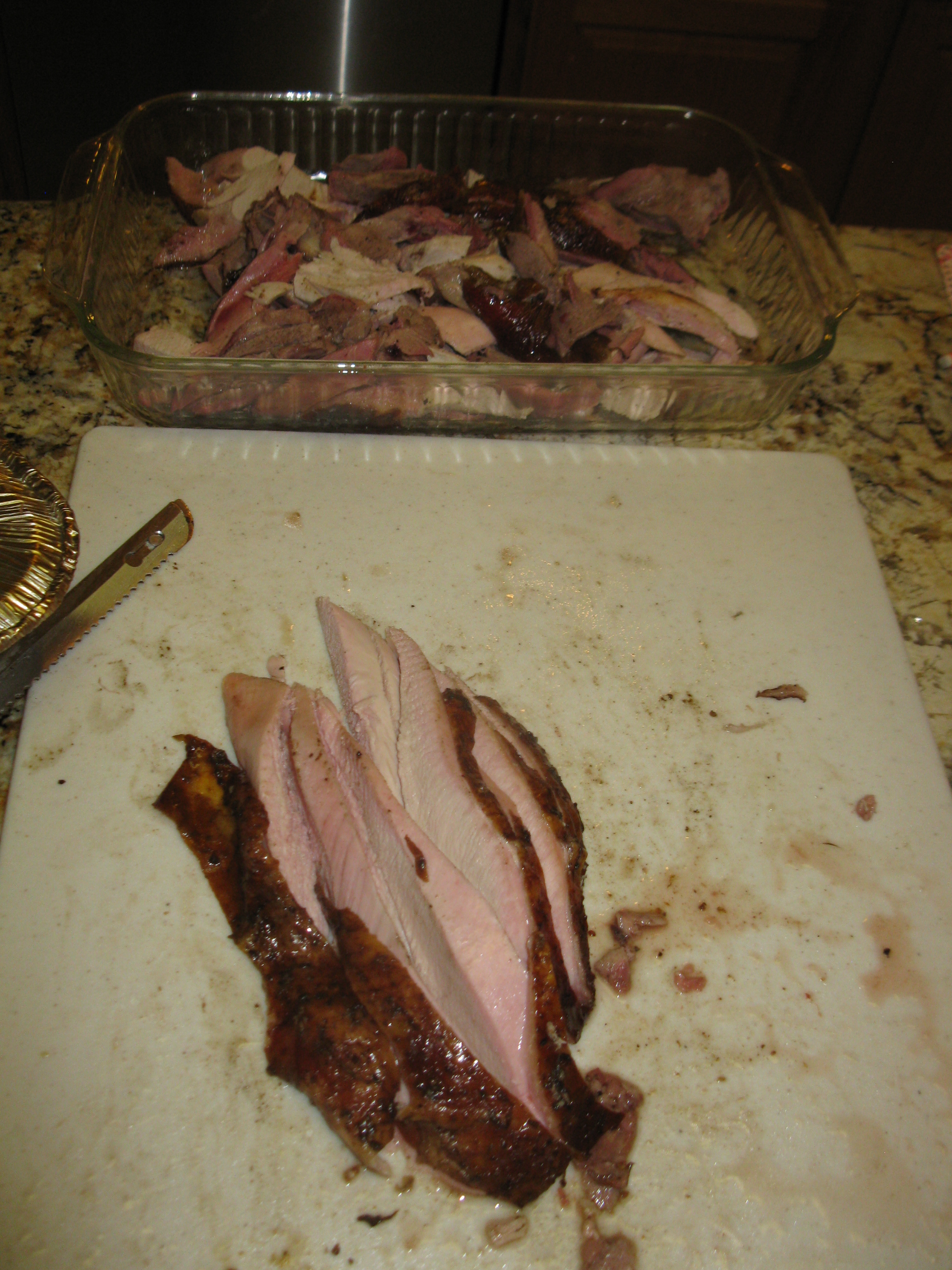
An electric knife works great for carving. Started with the thigh/leg, moved to the breast. This was plenty for our meal. After the meal, we took the time to get the rest of the meat from harder to reach places. This turkey fed 14 adults and teens with plenty for another 6 to 8 meals as leftovers. That works out to 1/2 pound of turkey per adult meal. We saved all the bones for making bone broth the next day.
Thigh and leg dark meat. Very tender, great flavor, so juicy!
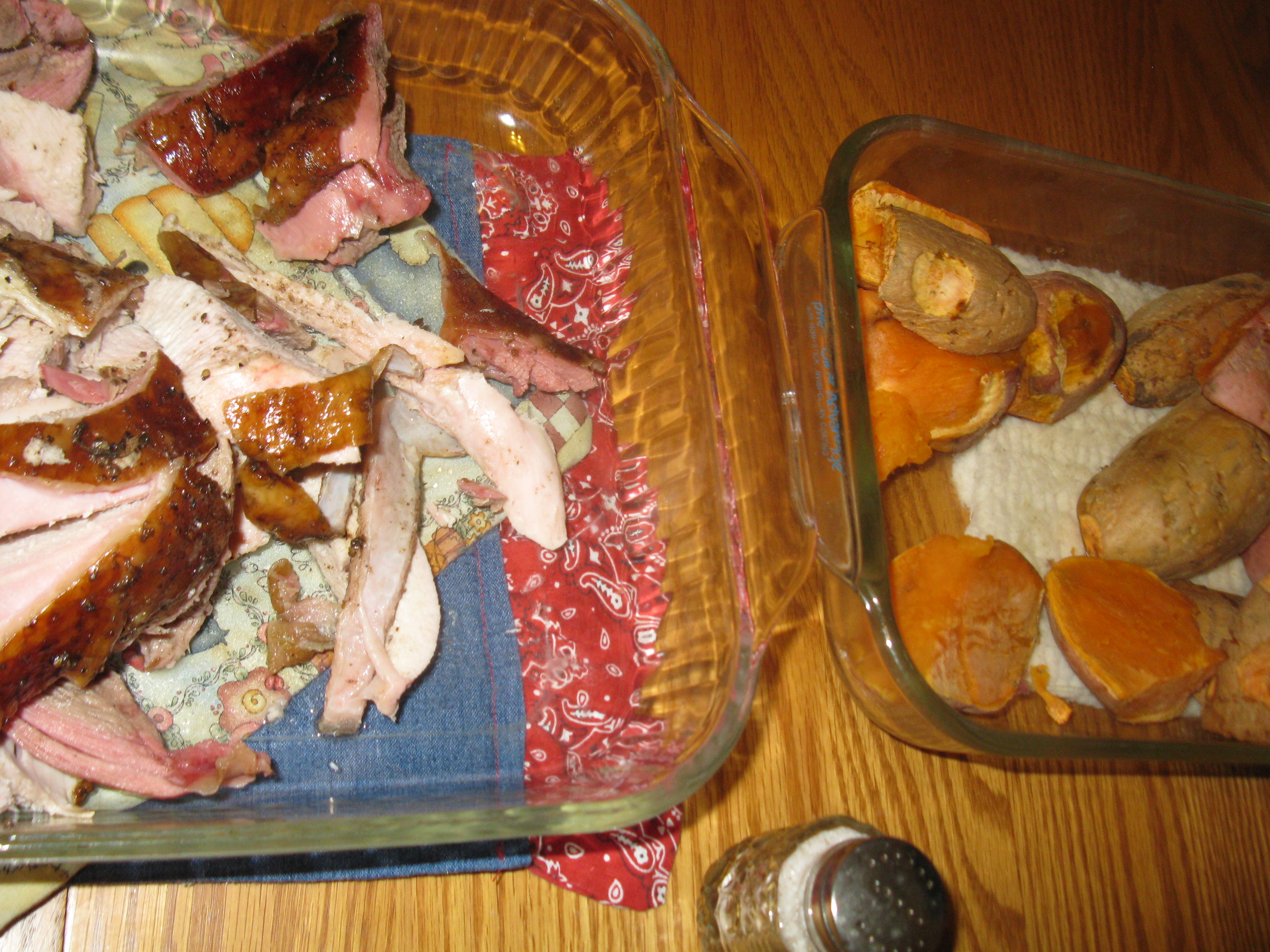
Adding white meat breast to the collection. Also very tender, juicy, not dry. Best I’ve ever had.
On the table along with sweet potatoes from the farm.
A great experience and meal. Happy Thanksgiving!
Here’s a video on carving your turkey. If your turkey is as dry as the one in the video, it’s not a heritage turkey from Blessing Falls Farm!
Posted inPoultry/Eggs, Recipes|Comments Off on Thanksgiving Turkey Preparation – Smoke, Roast, Bake
This is the final week of our CSA program for 2015. We’ve had continuous harvests and deliveries for 34 straight weeks! With Austin area nightly temperatures forecast in the low 40’s we know the harvest will slow dramatically. Most of the harvest will end with freezing temperatures typical to early December, though we expect some of the greens will continue for a while past that.
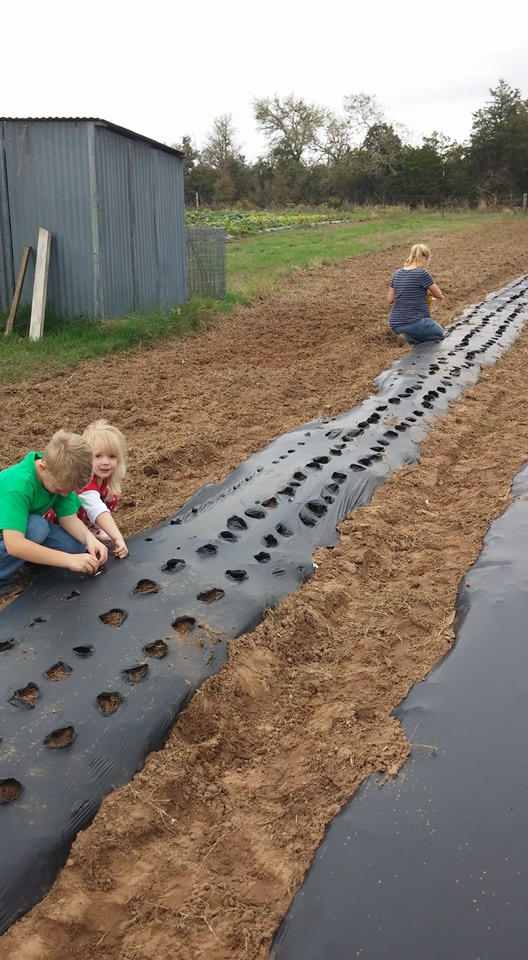
Planting Garlic at Blessing Falls Family Farm
We’re still at work preparing fields for spring planting, planning/ordering seeds, and getting organized to start seeds in the greenhouse in early January. This week the field dried out enough to plant garlic. Late due to the heavy rains that kept the tractor out of the field the last several weeks, but we should still have a good garlic harvest next June.
Thanks again to all our CSA members – spring, summer, fall – who supported us this year. It’s been a delight to work for you and with you. Your encouragement, comments, and financial investments helped us improve our quality and quantity of produce this year. We’re excited about next year and we hope to continue to improve the farm and continue to serve you and new members. We will soon announce details of our CSA program for 2016, along with opportunities for members to join early at a discount, so stay tuned for that. Please sign up for our newsletter if you’re not already a subscriber and you’ll get all the news and updates every few weeks as we announce plans.
Here’s our expected harvest this week:
Full share: Cucumbers, Squash, Basil, Beans or Eggplant, Chard, Winter squash, Broccoli, Spaghetti squash, Kale, Mizuna, Sweet potatoes (double portion), 2 lbs. Green tomatoes
As the end of the Fall CSA season nears, some of the varieties we had way back in early spring make an encore appearance. Chinese Cabbage and Swiss Chard are back in season. These are not the same plants from spring – those did not survive the blazing summer. These are new plants that we started in the greenhouse back in August, transplanted in September/October and are now ready for your family table. The mild fall weather is similar to early April, when our Spring CSA harvest began. The days will soon turn colder and the hours of daylight continue to decrease, meaning the harvest will soon end. Until then, enjoy the fresh greens and other mild-weather loving varieties.
Here’s this week’s expected harvest:
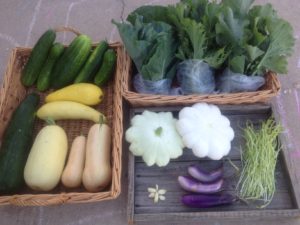
Full Share: Kale , Mizuna, 2 Spaghetti squash, Romanesco greens, Cucumbers and/or Summer Squash, Chinese cabbage, Swiss chard, 2 lbs. Green Tomatoes*, Beans or Eggplant, Winter Squash or Pumpkin
Author Ben Hartman applies modern manufacturing benchmarking and efficiency methodology to small farms. Written in a warm, friendly style, The Lean Farm is neither a boring textbook on efficiency and waste nor a rambling tale of personal anecdotes. It’s an encouraging guide to turning a hobby or break-even family farm into a sustainable, profitable, enjoyable business. Hartman’s goal is not sterile “factory” farms but productive farms where waste is minimized and the harvest is maximized. Efficiency gives the farming family time for a balanced lifestyle and frees up time and resources for expanding into other farming endeavors.
The main target audience is experienced farmers. Those who have farmed for several seasons will be challenged to examine their routines and practices, looking for ways to cut waste, reduce time spent on tasks, and improve the quality of the harvest they provide for their communities. In considerable detail, it covers the whole spectrum of farm tasks, from planning plantings to and the marketing and sale of the harvest. New farmers and those at the hobby scale may find many of the details beyond the scope of their experience. However, any who aspire to full time farming will benefit from increased awareness of the many ways that waste can creep in to ‘simple’ farm tasks. The book will encourage all readers to look beyond the first ‘simple’ way to get things done and consider several ways to accomplish goals, being mindful of waste and the time costs.
The last chapters apply specifically to Hartman’s farm and will be the most helpful for starting farmers. Ben and his wife farm less than one acre, yet are able to comfortably support their family. An inside look at how they work and apply the ‘lean’ principles will inspire every farmer.
Another 8 inches of rain last weekend has not seriously harmed the garden so far. And it may spark the summer garden into yielding a few more eggplant and peppers.
Here’s the expected harvest this week:
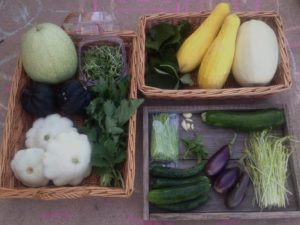
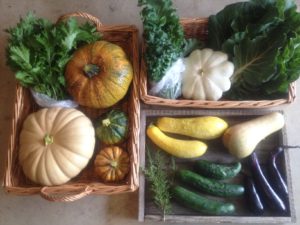
Full Share: Squash, Cucumbers, Kale (double portion), Mizuna (double portion), Spaghetti squash, Lg. Black Futsu or odd pumpkin, 2 mini pumpkins, Large Pumpkin, Eggplant, Rosemary
Half Share: Squash, Cucumbers, Kale (double portion), Mizuna, Spaghetti squash, Black Futsu Pumpkin, Rosemary
Mid-season Share: Squash, Cucumbers, Winter squash, Kale (double portion), Mizuna (double portion), Spaghetti squash, Black Futsu Pumpkin, Rosemary
Remember your pumpkins and winter squashes will store well for several weeks. Enjoy them now as decorations now and later in your meals. Large pumpkins can easily yield several pies for the holidays – see the link below.
Fall CSA Week 10 – Full Share, Blessing Falls Farm








 Author Ben Hartman applies modern manufacturing benchmarking and efficiency methodology to small farms. Written in a warm, friendly style,