Which Came First…?

Here at Blessing Falls, the chickens come before the eggs. But even before the chickens arrive, come weeks of planning and preparation – building coops, expanding water lines, installing electric fencing, building watering and feed systems, and so on.  Our young entrepreneur Andrew has invested thousands of dollars of his own money in hopes of providing our CSA members with the best eggs in Texas.

Yesterday, Andrew welcomed 200 more laying hens, adding to the 60 he already has on the farm. They’re now resting comfortably in their coops, where they’ll stay for 3 days getting acclimated to their new home. Then they’ll be free to roam the farm’s natural pastures. Andrew will move the open floored houses regularly to avoid manure buildup and keep the birds healthy and comfortable. The electric fencing is moved when the hens need fresh pasture. They’ll free-range and have plenty of grass and bugs to eat, as well as non-GMO 100% organic feed from Coyote Creek, a local farm just east of Austin.

We’re told that Blessing Falls eggs are the best you’ll ever taste and we’ve not been able to keep up with demand. With these new hens, we hope to supply plenty of eggs for our CSA members and have extra for others to try. Click here for details on how to have these eggs delivered weekly to your home or workplace.

Planning meeting where young and younger share ideas for the world's greatest chicken housing.

Planning meeting where young and younger share ideas for the world’s greatest chicken housing.

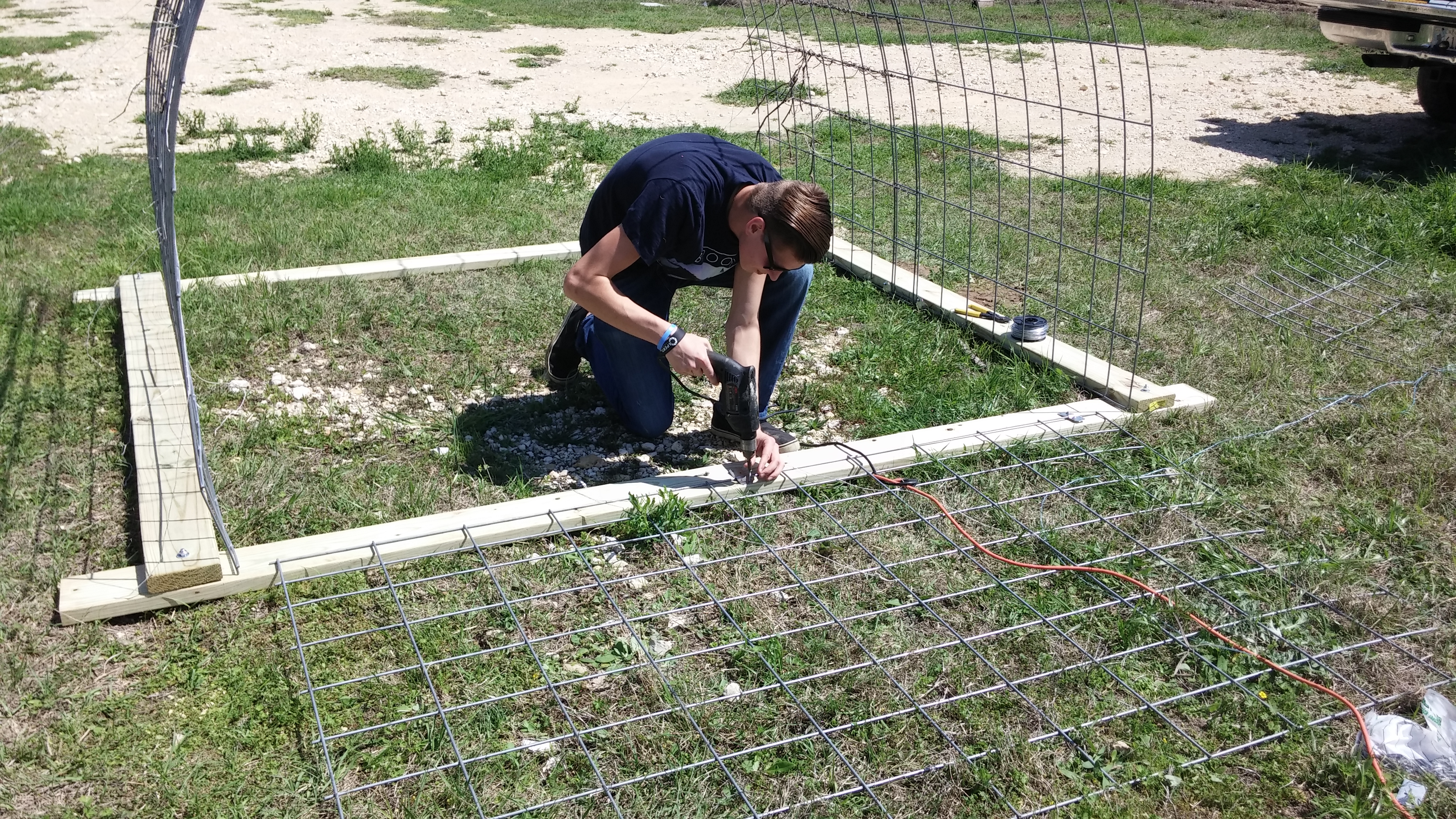
Construction begins

Construction begins

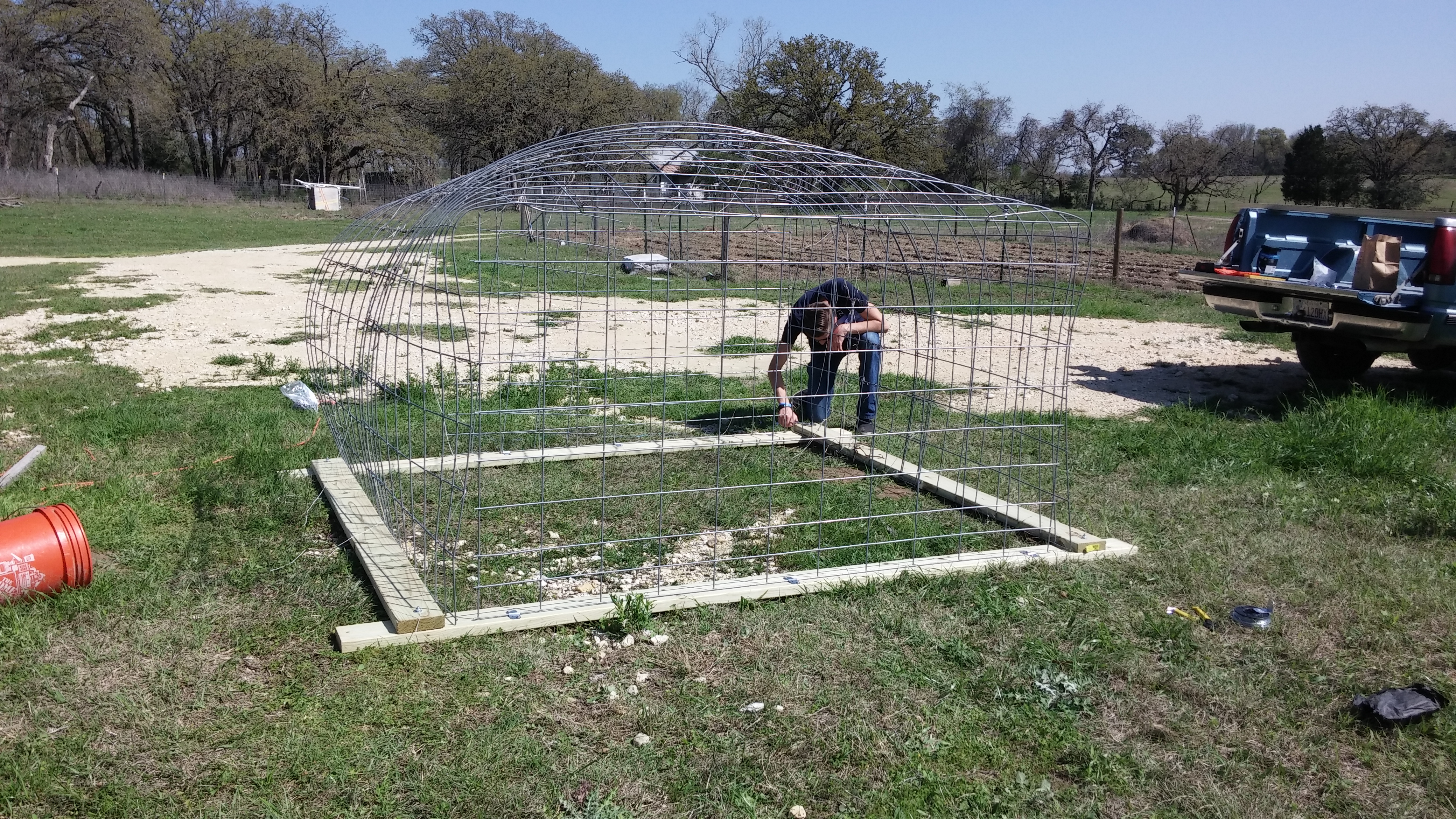
Main frame complete for first new chicken coop

Main frame complete for first new chicken coop

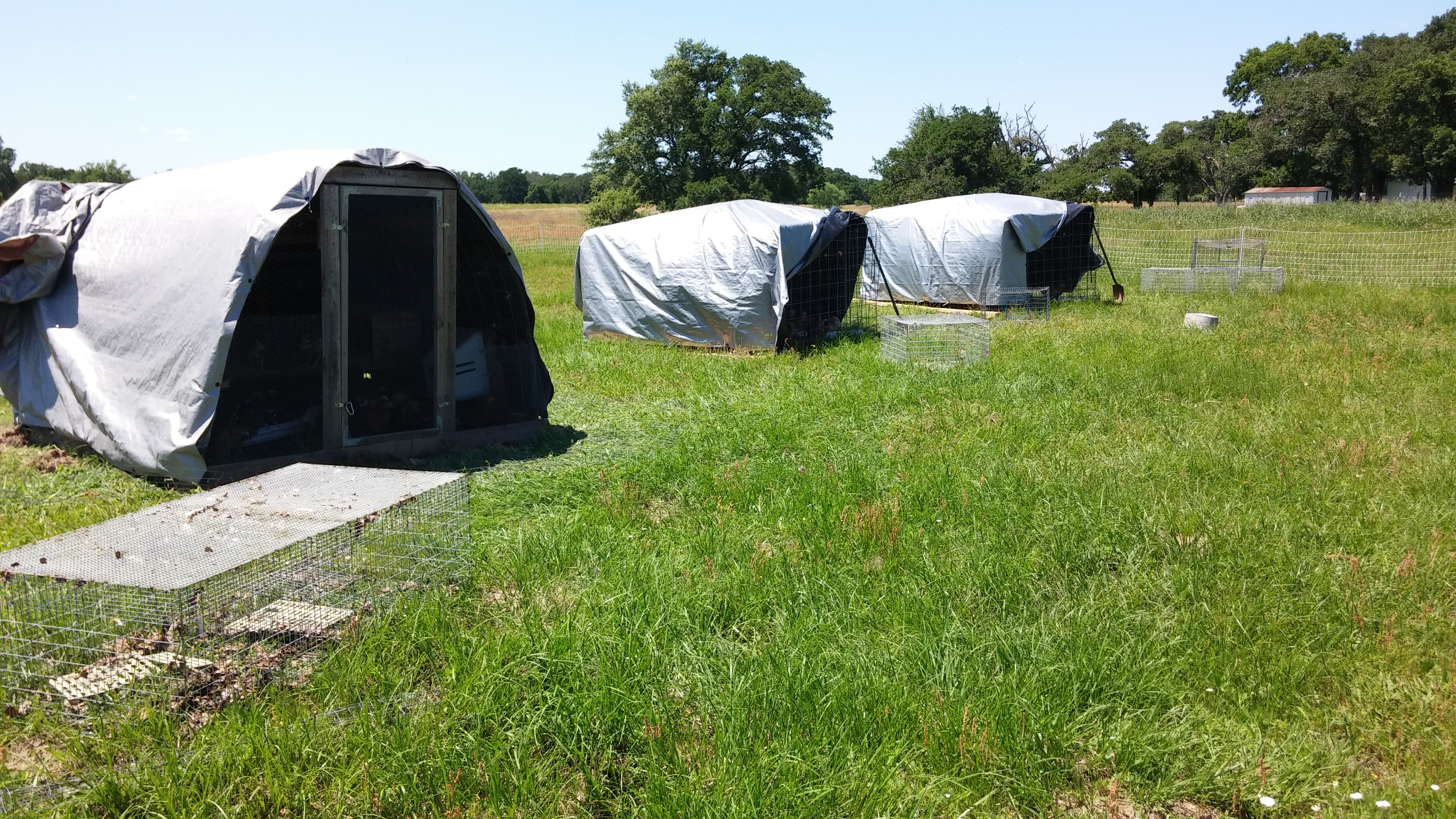
3 chicken coops housing 200 young laying hens.  Electric fencing keeps predators away at night.

3 chicken coops housing 200 young laying hens. Electric fencing keeps predators away at night.

Newly arrived hens are kept inside the coop for 3 days getting familiar with their new home.

Newly arrived hens are kept inside the coop for 3 days getting familiar with their new home.

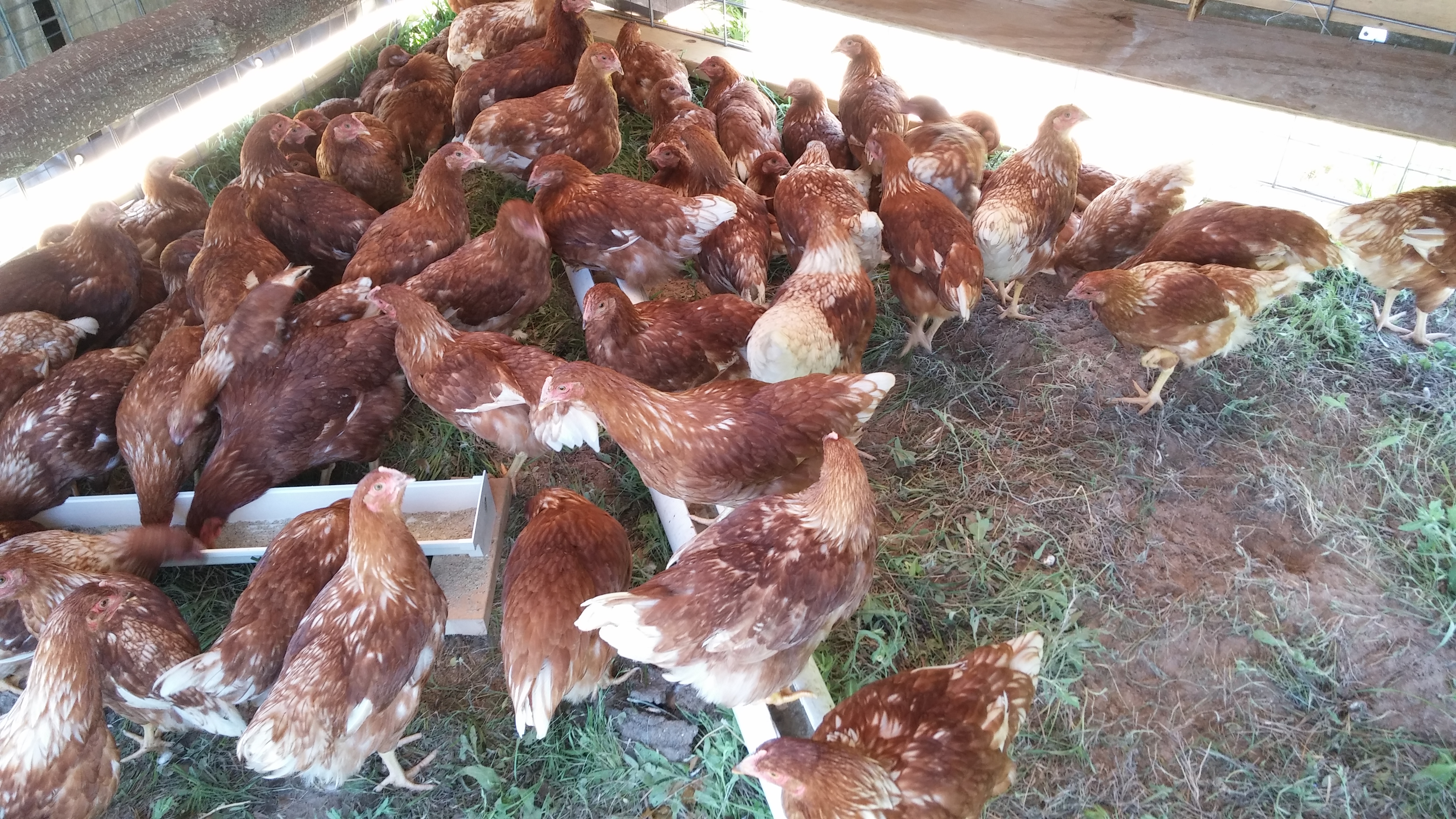
Loving their new home and Coyote Creek organic feed.

Loving their new home and Coyote Creek organic feed.

Posted in CSA/Farm Share, How To Farm, Poultry/Eggs | Comments Off on Which Came First…?

Austin Spring CSA – Week 5

The garden is producing well and we’re thankful that the recent severe weather has not damaged our garden.  We’ve been getting good rain lately – just right to make everything flourishing.  The rains softened the soil enough to till in our oats/peas cover crop in the fall garden.  We sowed black-eyed peas on top before we tilled and those are already sprouting with the rains and recent sunny weather.  Black eyed peas are a great cover crop and should also yield lots of peas for our late summer CSA shares.  These will grow until August when we’ll till them under and plant for the fall season.

Here’s your week 5 harvest:

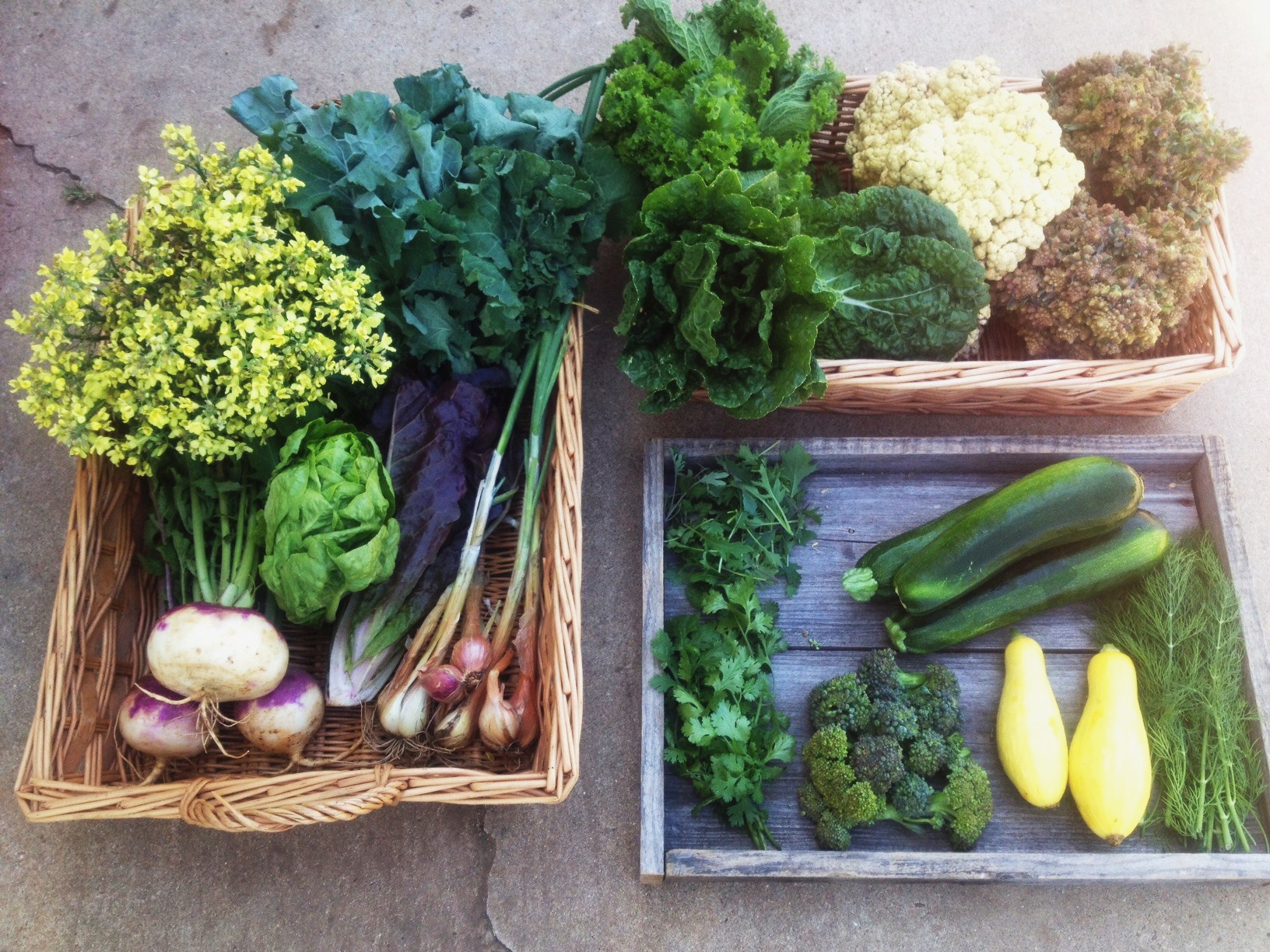
Full share: Cauliflower (3 portions), Kale and Lettuce (2 portions each), Green Onions or shallots, Broccoli, Cilantro, Chinese cabbage, Dill, Broccoli flowers, Mustard greens, Turnips, Zucchini or Yellow Squash

Half share: Cauliflower (2 portions), Kale, Lettuce, Green Onions or shallots, Broccoli, Cilantro, Chinese cabbage, Mustard greens or Turnips

Spring2015_Week5_Full

Spring Week 5 Full Share


Meet Your Farmer

Andrew is Michael’s 18 year old brother who is currently hard at work expanding his flock of laying hens! This week he is adding 200 birds to his flock of 60. By June he hopes to have plenty of eggs to offer to our CSA members. He is also a great help in the garden when we need extra hands.

Recipe Ideas

Greens such as kale, chard, mustard and turnip greens are a staple in the spring garden. They are full of essential nutrients and vitamins; helping to boost your immune system and energy. I love to add greens to any pasta dish or soup. They add some extra color and flavor to your meal! Here is a great article with information on different types of greens and a simple way to cook them!

Cauliflower is coming in big again this week and the kale continues to thrive – here’s a good recipe for both.  We had this for dinner tonight.  You’ll swear there’s rice or couscous in it but there’s not.  Really good and will work as a taco filling – though we’re not ready to give up our grass fed beef just yet!

Spanish Cauliflower Rice with Kale (source)

Prep Time: 10 minutes
Cook Time: 25 minutes
Total Time: 35 minutes
Yield: Serves 3 to 4 people

Ingredients

2 tablespoons olive oil
1 yellow onion, chopped
1 large head cauliflower, grated
6 cloves garlic, minced
1 jalapeño, seeded and finely chopped
2 cups tightly packed kale leaves*
1 14.5-ounce can diced tomatoes
1 teaspoon kosher salt, or to taste
1.5 tablespoons chili powder
Cherry or grape tomatoes for serving, optional

Instructions (check out the link for photos of every step)

1. Remove all of the green stems from the cauliflower and chop the head in half. Using a box grater (or a food processor), grate the whole head of cauliflower.
2. In a large skillet, heat the oil to medium-high and sauté the onion until fragrant and softened, about 5 minutes.
3. Add the jalapeño, and garlic and sauté another 2 to 3 minutes.
4. Add the grated cauliflower and cook, stirring frequently, until it begins to turn brown and cook down, about 5 to 8 minutes.
5. Add the diced tomatoes, salt, and chili powder and stir well to combine. Cook until much of the liquid is absorbed, about 5 minutes.
6. Add the chopped kale leaves and stir them into the mixture well. Cook until they have turned bright green and have wilted, about 3 minutes.
7. Serve cauliflower rice alongside your favorite entrée.

Posted in CSA/Farm Share, Recipes, Vegetables | Comments Off on Austin Spring CSA – Week 5

Austin Spring CSA – Week 4

This week we have really started seeing the benefits of the warm weather! The first tomato has been spotted and we got our first harvest of zucchini this week! We can see a bountiful harvest headed our way and appreciate you spreading the word about our CSA. We are still accepting new members so be sure to tell friends and family!

For the week of April 20-25, here’s what we’re harvesting and delivering throughout greater Austin.  Members shares are a bit more generous this week.  The blessing of rain and warm yet mild days have brought an abundant harvest and we’re passing on the bounty.

Full share:
Cauliflower (4 portions), Lettuce and Spinach (double portions of each),
Sunflower Microgreens, Swiss Chard, Cilantro, Chinese (Napa) Cabbage, Turnips,
Broccoli or Zucchini

Half share:
Cauliflower (3 portions), Lettuce (double portion), Spinach, Swiss Chard, Cilantro,
Chinese (Napa) Cabbage

(Share contents may change slightly throughout the week depending upon harvest)
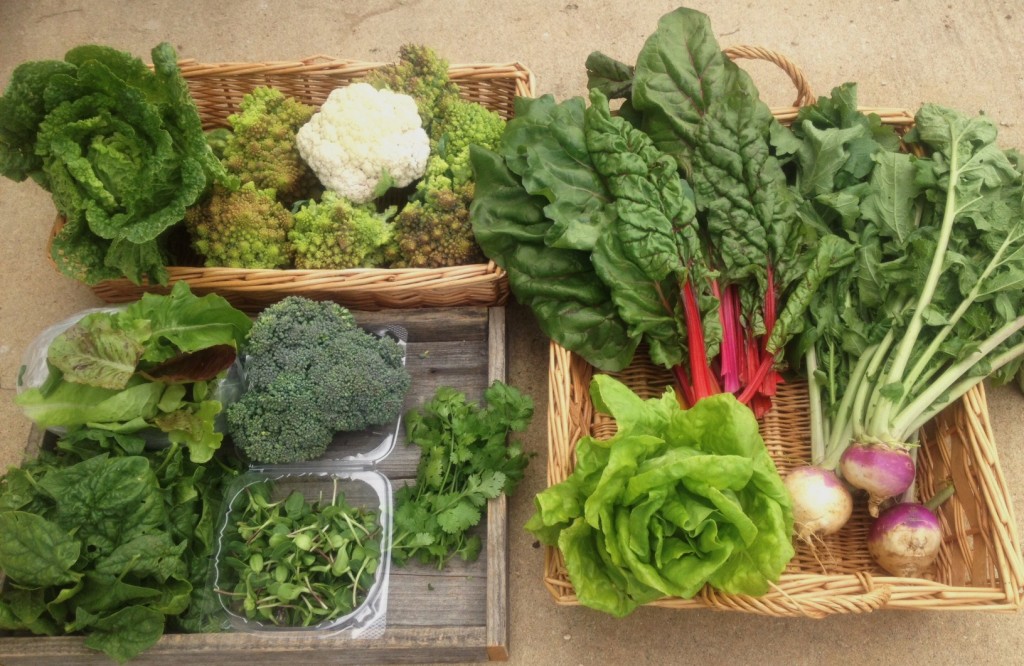
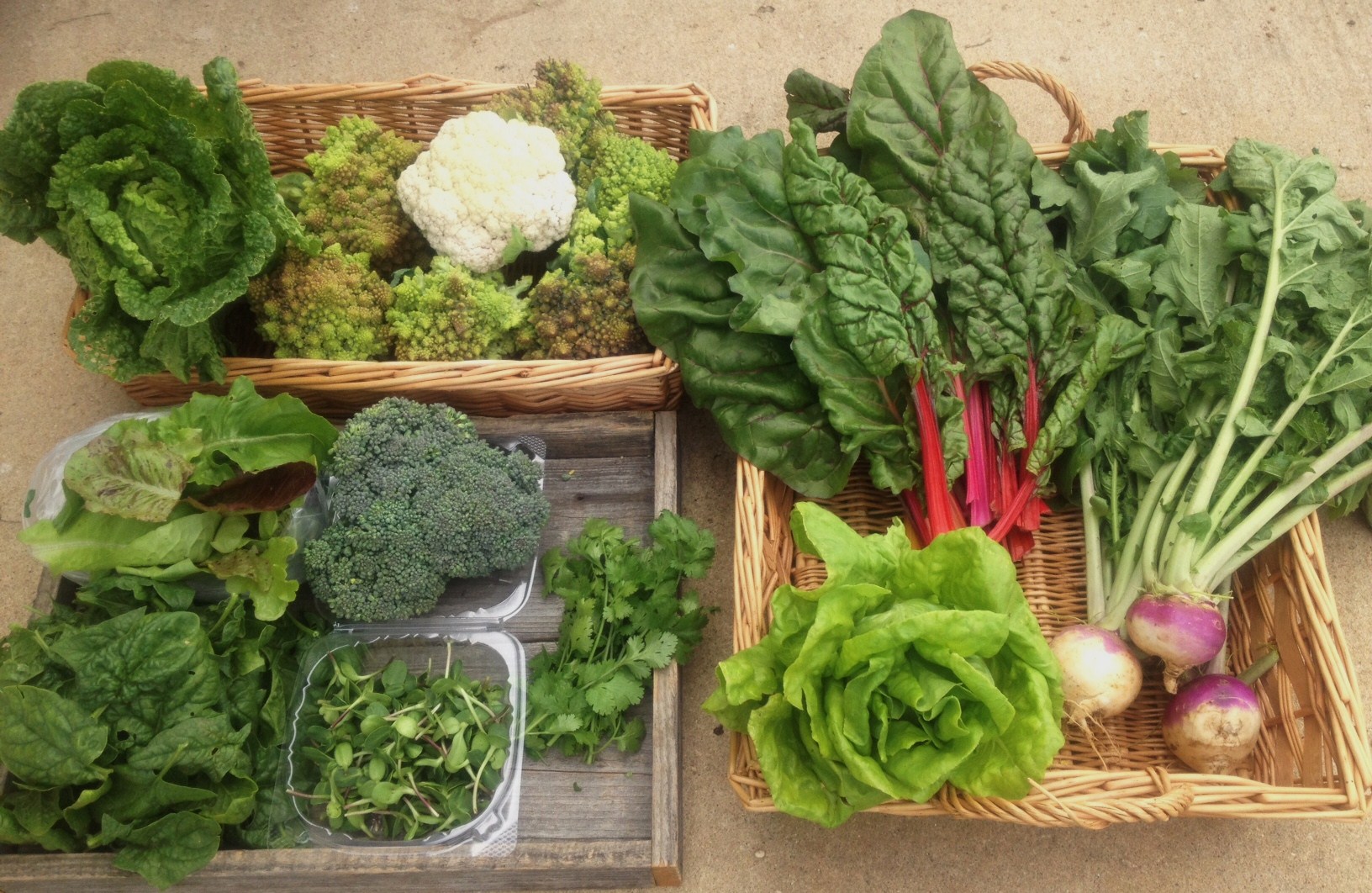
Week 4 Full Share clockwise from upper left: Chinese/Napa Cabbage, Cauliflower (white and green/Veronica), Rainbow Swiss Chard, Turnips, Head Lettuce,  Cilantro, Broccoli, Microgreens/Sprouts, Leaf Lettuce, Spinach

Week 4 Full Share clockwise from upper left: Chinese/Napa Cabbage, Cauliflower (white and green/Veronica), Rainbow Swiss Chard, Turnips, Head Lettuce, Cilantro, Broccoli, Microgreens/Sprouts, Leaf Lettuce, Spinach

Meet Your Farmer

Mark is my (Emily’s) dad and the foundation of our family farm. He loves sharing his knowledge, ideas and time to help us improve our garden. He enjoys caring for the land – specifically his cows, heritage turkeys, fruit trees and blackberry bushes. In his spare time he enjoys reading, studying and learning from other farmers. He made our website and Facebook page and takes care of our customer communications. We are so grateful for the investment that he has made in our family and future generations.

Nutrition and Recipes

From creamy soup to crispy tots, cauliflower is a very versatile veggie. You can steam it, roast it, mash it, pickle it, or grate it to use as a grain substitute. Visit the ‘Spring Veggie Recipes’ section of our Pinterest page for creative, new ways of preparing this delicious vegetable! Cauliflower also has many health benefits. It has a high vitamin C content, helps to prevent cancer and is a good source of minerals such as manganese, copper, iron, calcium and potassium.

Here’s a recipe I’ve tried before, it’s also on the Pinterest page.

Bacon-Cheddar Cauliflower Chowder  Low-Carb Alternative to Baked Potato Soup (source: Iowa Girl Eats)

Ingredients*:
8 slices center-cut bacon, chopped (half used for garnish)
1/2 small onion, chopped OR 1 teaspoon onion powder
1 celery stalk, chopped
2 garlic cloves, minced
salt & pepper
4 cups shredded or grated cauliflower (1/2 large head)
2 Tablespoons water
2 Tablespoons gluten-free or all-purpose flour
2 cups chicken broth, divided
2 cups 2% milk
3-4 dashes hot sauce (or more or less)
2-1/2 cups (12oz) shredded sharp cheddar cheese, divided (half used for garnish)
2 green onions, chopped (optional)

1. Whisk together flour and 1/4 cup chicken broth in a small bowl then set aside.
2. Saute bacon in a large soup pot over medium heat until crisp. Using a slotted spoon, transfer bacon to a paper towel-lined plate then remove all but 1 Tablespoon drippings from the pot. Add chopped onion (if using,) celery, and garlic to the pot then season with salt and pepper and saute until vegetables are tender, about 4-5 minutes.
3. Add cauliflower and onion powder (if using) to the pot then stir to combine. Add water then place a lid on top and steam cauliflower until tender, stirring a couple times, about 5-7 minutes. Add remaining chicken broth and milk then turn up heat and bring to a boil.
4. Slowly whisk in flour/chicken broth mixture while stirring, then turn down heat and simmer for 3-4 minutes, or until chowder has thickened. Turn off heat then stir in 2 cups cheddar cheese until smooth, then stir in half the cooked bacon. Taste and adjust salt, pepper, and/or hot sauce if necessary. Serve topped with remaining shredded cheese, cooked bacon, and green onions, if desired.
*Use a food processor’s chopping and grating blades to make prepping veggies and cheese a breeze!

You may be unfamiliar with Chinese (Napa) cabbage. It’s easy to use in fresh salads and stir fry.  It’s also great on the grill or try something new and make your own kimchi!
Posted in CSA/Farm Share, Recipes, Vegetables | Comments Off on Austin Spring CSA – Week 4

Austin Area Spring CSA – Week 3

For the week of April 13-18, here’s what we’re harvesting and delivering throughout greater Austin to our Blessing Falls CSA members. (If you’re not a member, we invite you to join)

Full share:
Cauliflower, Lettuce, Kale (double portions of each), Broccoli (triple portion),
Spinach, Microgreens, Dill, Broccoli flowers, Swiss Chard, Mustard or turnip greens

Half share:
Broccoli (double portion), Cauliflower, Lettuce, Microgreens, Spinach or Swiss Chard, Dill, Broccoli flowers

(Share contents may change slightly throughout the week depending upon harvest availability.)

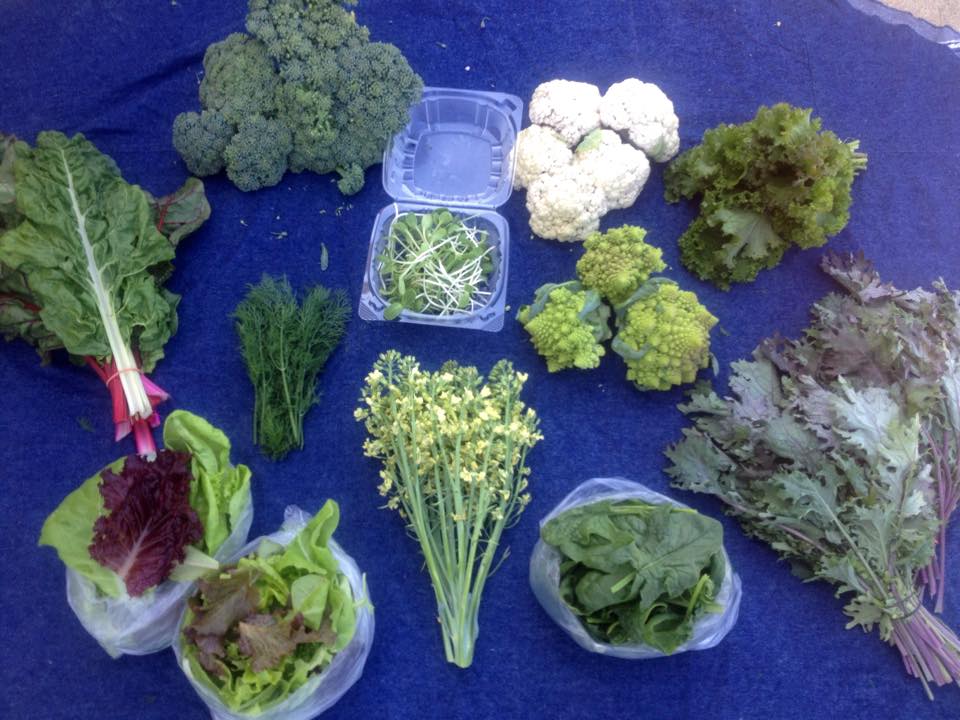
Spring Week 3 Full Share: rainbow chard, broccoli, sunflower Microgreens, white and green cauliflower, mustard greens,  lettuce, dill, broccoli flowers, spinach, kale

Spring Week 3 Full Share: rainbow chard, broccoli, sunflower Microgreens, white and green cauliflower, mustard greens, lettuce, dill, broccoli flowers, spinach, kale

Meet Your Farmer

Sam is Michael’s 15 year old brother and our right hand man in the garden. He helps us with almost every gardening task. He’s an expert at planting, harvesting and packaging CSA shares. He’s also the Blessing Falls beekeeper! He’s the hardest working 15 year old I’ve ever known. He loves family and sports and his favorite thing to grow is broccoli!

Nutritional Facts

Quoted from Microgreens: Health Benefits and Nutrition Facts.  We encourage you to read the whole article to learn more about microgreens and their amazing health benefits!

Turns out microgreens are not just a plain good-for-you food or a healthy garnish on salads and soups. Scientific research now proves that these tiny seedlings harvested and eaten when they are just a few inches tall are a real superfood packed with antioxidants and other health-promoting nutrients.

A team of scientists from the University of Maryland and the U.S. Department of Agriculture analyzed the nutrient composition of 25 microgreen varieties. They discovered that in general microgreen cotyledon leaves had considerably higher nutritional densities than their mature counterparts (cotyledon leaves refer to the embryonic first leaves of a seedling). This microgreen study was published in the August 2012 issue of the Journal of Agricultural and Food Chemistry.

Young edible seedlings are a superb source of vitamin C, an antioxidant that helps protect your body from the harmful effects of free radicals. The 2012 study on microgreens reported that even the microgreen sample that had the lowest levels of vitamin C contained a whopping 20 milligrams of vitamin C per 100 grams – that’s almost twice the amount of vitamin C found in tomatoes!

Carotenoids, such as beta-carotene, are thought to reduce the risk of disease, particularly certain types of cancer and eye disease. Turns out that many microgreens are also a good source of this important nutrient.” Microgreens also include many other nutrients such as antioxidants, vitamin E, vitamin K.

Recipes

We enjoyed trying these kale and broccoli smoothie recipes this week and hope you do too! Follow Blessing Falls on Pinterest to see more tasty recipe ideas!

Kale Smoothie
1/4 c. shelled pistachios
4 pitted dates
1/2 c. water
2 c. almond milk
1 Tbl. coconut oil
1 c. kale leaves
2 frozen bananas, cut in chunks
1 Tbl. maple syrup
1/2 tsp. vanilla
1 handful or so of ice

Heat the water in the microwave or on the stove until boiling. Add pistachios and dates, and let soak for 5 minutes. Blend other ingredients, except ice. Then drain water from nuts and dates, and add them to the blender. Blend until smooth. Add ice until it’s the texture you like.

Broccoli Smoothie
1 c. broccoli
1/2 an apple, chopped
1 1/2 c. almond milk
1 frozen banana
6 oz. pineapple-orange juice
1/2 avocado
1/2 tsp. vanilla
2 T. honey
1 handful or so of ice

Blend all ingredients until smooth, adding ice last.

We hope members enjoy their shares this week – we always value your comments and suggestions.  And our CSA program remains open for new members.  Sign up this week and you’ll get your first share next week, delivered right to your door.  It’s that easy.

Posted in CSA/Farm Share, Vegetables | Comments Off on Austin Area Spring CSA – Week 3

New Bee Hives

We’re expanding in all areas this spring – bigger garden, more calves, more berries, another flock of laying hens.  And we’re adding a new bee hive. Our experienced beekeeper Sam now has his brother Noah as an apprentice.  Here’s what they been up to…

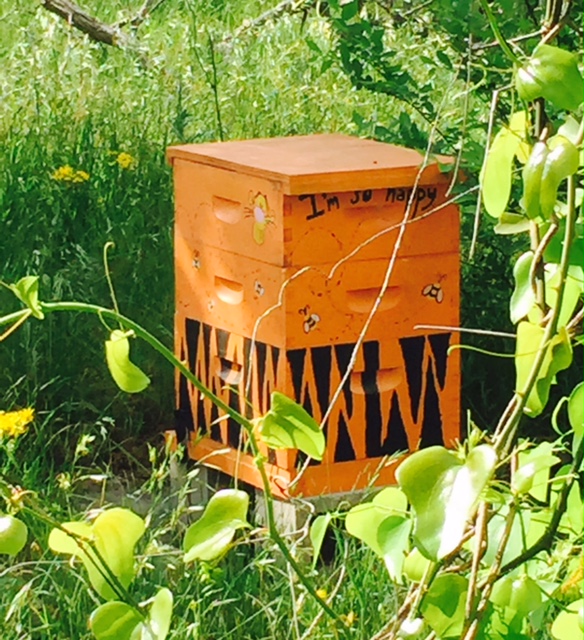
image3

Current “Tigger” hive, we hope to extract honey in June

Building the new hive

Building the new hive

image11

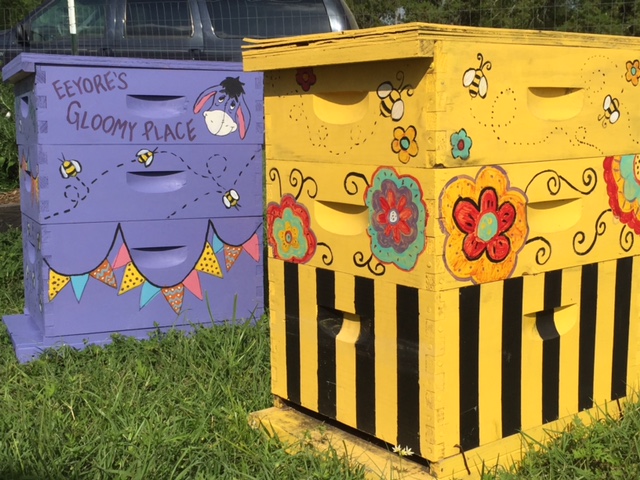
Hive painted to fit the “Hundred Acre Wood” theme of the other hives.

"Eeyore" hive ready for 'bees'-ness

“Eeyore” hive ready for ‘bees’-ness 

Bees enjoying our lavender.  So many wildflowers this spring should make for wonderful honey.

Bees enjoying our lavender. So many wildflowers this spring should make for wonderful honey.

As extraction proceeds later this season, we’ll let the Blessing Falls CSA members know how they can add this local, all natural honey to their weekly delivery.


Posted in How To Farm | Comments Off on New Bee Hives

Austin Area Spring CSA – Week 2

Here’s what we’re harvesting and delivering throughout greater Austin this week to Blessing Falls CSA members.  Members, April 6 you should receive your weekly email reminder with your specific delivery date and address verification.

Full share:
Broccoli, Kale, and Lettuce (double portions of each)
Swiss chard or spinach, Parsley, Thyme, Shallots
Cauliflower, Asparagus, 2 boxes of Strawberries

Half share:
Broccoli and Kale (double portions of each)
Lettuce,  Swiss chard or spinach, Parsley, Thyme,

Update April 11 – Members receiving a half share can double their food by upgrading to a full share.  Only $12 a week for the rest of the season. The harvest is expanding and we need your help in eating it all!  Just let us know before Monday noon and you can start your upgrade that same week.  And thanks for telling friends and neighbors about available shares.

As last week, the Strawberries are from Bernhardt’s Farm.  Some of the asparagus is grown here at Blessing Falls and some at Bernhardt’s.  Also remember the washing instructions we mentioned last week.

(Share contents may change slightly throughout the week depending upon harvest availability.)

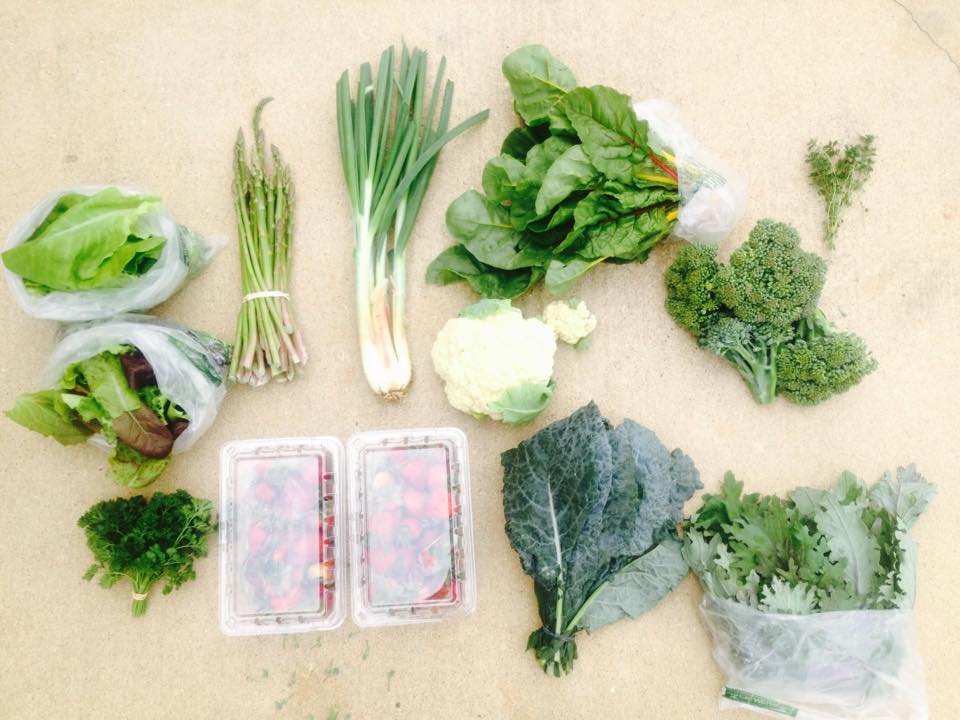
Full Share Week 2 - Top: Lettuce Asparagus Shallots Chard Cauliflower  Broccoli Thyme, Bottom: Parsley, Strawberries (boxed), 2 types of Kale

Full Share Week 2 – Top: Lettuce Asparagus Shallots Chard Cauliflower Broccoli Thyme, Bottom: Parsley, Strawberries (boxed), 2 types of Kale

Meet Your Farmers:

Michael and Emily (Owners of Blessing Falls Garden) : Michael and I started gardening, soon after being married, with the hope that one day it could become a successful family business. Now, three years later, the garden has grown and so has our family! We have two cute kids, Lily (2 years) and John Mark (9 months) who keep us busy and entertained every day! Michael does all of our driving. He drives the tractor, tiller, lawn mower, and delivery truck! He also helps out with the planting, harvesting, spraying and any other odd jobs around the farm. His favorite thing to grow is tomatoes. I (Emily) make the plans for the garden, plant, harvest and package CSAs, weed, and take care of garden related research and communications. I also write your weekly email contents and enjoy making gift items for our Etsy Shop. My favorite thing to grow is… well, I can’t decide! We really enjoy growing food for you and thank you for supporting us in this gardening venture!

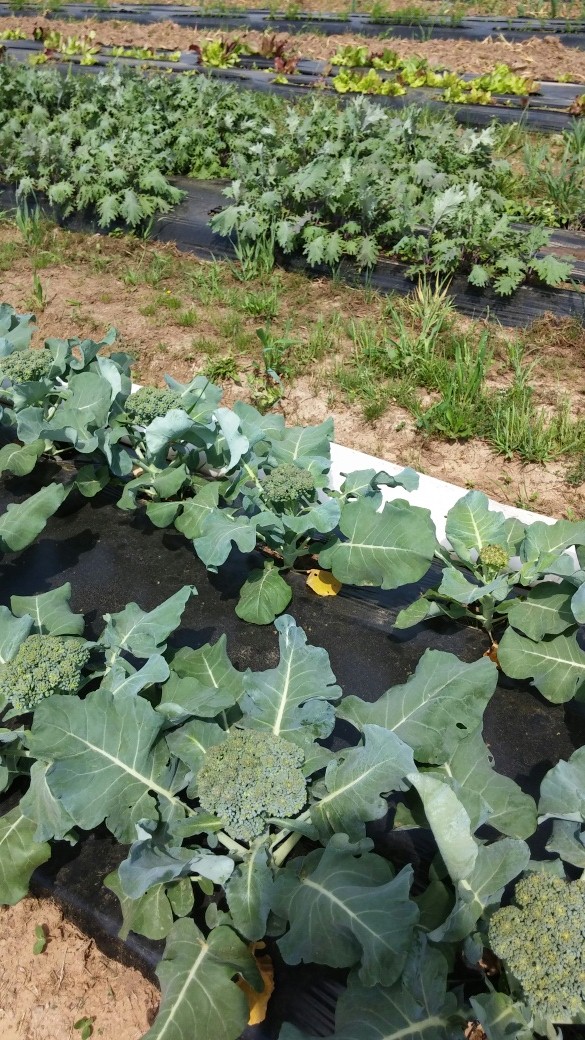
Blessing Falls Main Garden April 5, 2015.  Broccoli with Kale and  Lettuce in background

Blessing Falls Main Garden April 5, 2015. Broccoli with Kale and Lettuce in background

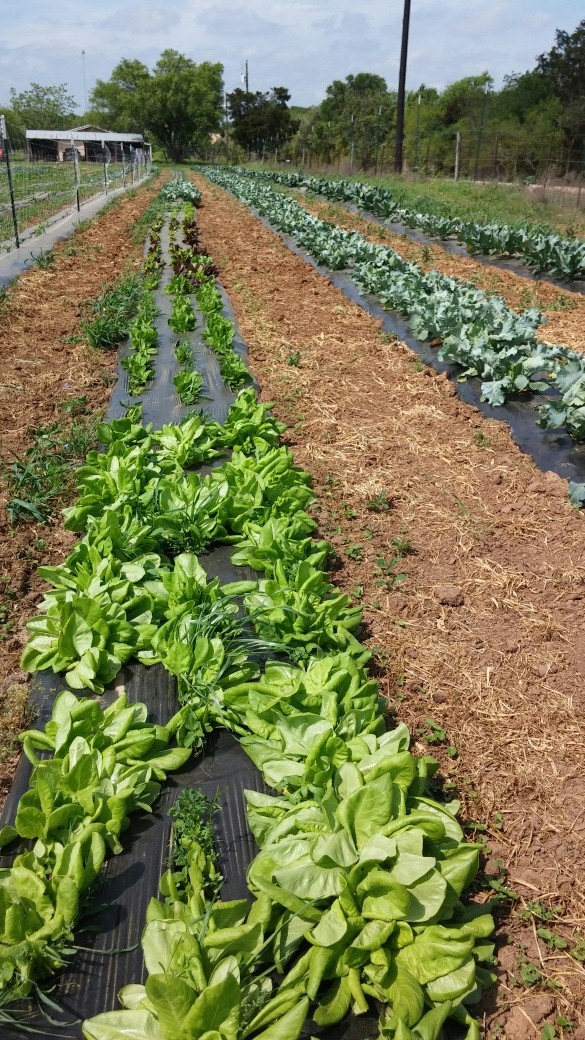
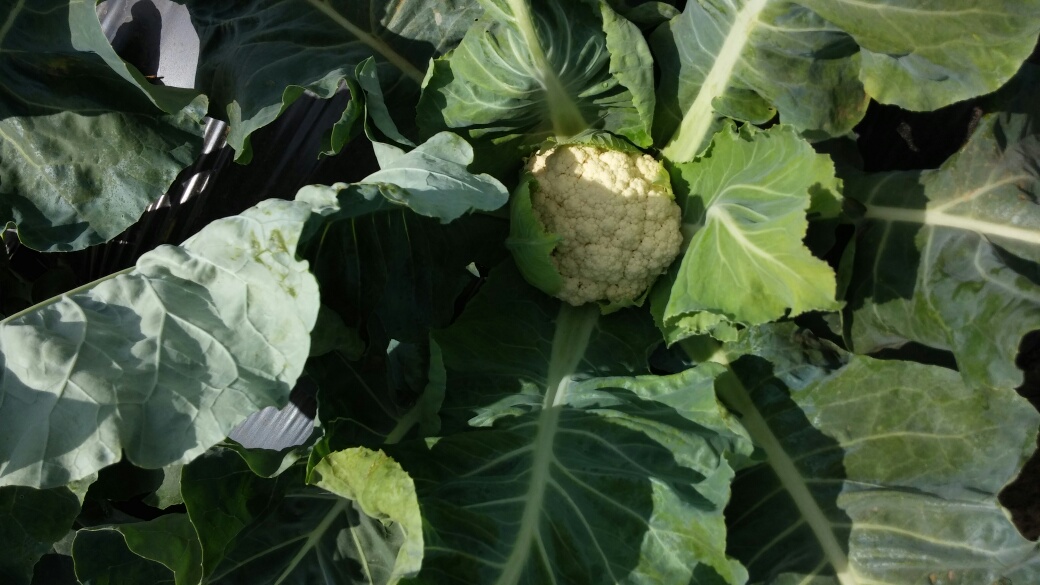
Blessing Falls Main Garden April 5, 2015.  Lettuce (left), Cauliflower (right)

Blessing Falls Main Garden April 5, 2015. Lettuce (left), Cauliflower (right)

Nutritional fact:

Your parents knew what was up when they told you to eat your broccoli. This verdant vegetable is a powerhouse of nutrients. It’s reputed to benefit digestion, the cardiovascular system and the immune system, and to have anti-inflammatory and even cancer-preventing properties.” Read the rest of this interesting article on the incredible, nutritional benefits of broccoli!

Recipes

Remember the ideas from last week are useful with many of this week’s items.  Here’s another that has long been one of our favorite family recipes and it tastes even better with home grown broccoli!

Broccoli and Bacon Salad:

2 heads broccoli, cut in bite-size pieces
5 slices bacon, cooked crisp
1/4 c. red onion, chopped fine
3/4 c. raisins
1/2 lb. Monterey Jack cheese, cubed
Dressing:
1 c. mayonnaise
1/4 c. sugar
2 Tbl. white vinegar

In a large salad bowl, mix broccoli, bacon, onion, raisins, and cheese. In a small bowl, mix dressing ingredients and pour over salad. Mix well and serve or chill a few hours before serving. Serves 8-10.

First week in CSA Shares, More in Coming Weeks . . . .

20150406_114050_resized

Blessing Falls Main Garden, April 5 2015. Cauliflower heads forming, should be ready for harvest soon.


Posted in CSA/Farm Share, Recipes, Vegetables | Comments Off on Austin Area Spring CSA – Week 2

Austin Area Spring CSA – Week 1

The first week of the Blessing Falls CSA spring season is finally here! We are so excited to share the fruits of our labor with you!  Deliveries are Wednesday and Saturday afternoons. On March 31, Austin area CSA members should have received their weekly email reminder with your specific delivery date and address verification.

Share contents for this week:

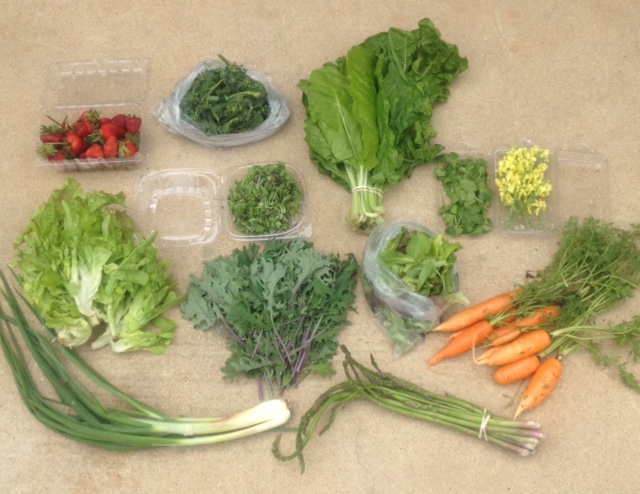
Week 1 - Full Share

Spring Week 1 – Full Share

Half share:
Shallots, Broccoli flowers, Cilantro, Carrots, Lettuce (double portion), Kale, Swiss Chard

Full share:
Shallots, Broccoli flowers, Cilantro, Carrots (double portion), Lettuce (double portion), Kale, Swiss Chard, Strawberries, Asparagus, Broccoli, Micro greens

(Share contents may change slightly throughout the week depending upon harvest availability.)

More Details on This Week’s Share

Our vegetables are never sprayed with any toxic or dangerous chemicals. We try to clean your produce as best we can before delivery, but you may want to give them a rinse before using them. Some vegetables don’t store well after being washed so those may have small amounts of dirt on them since we try to deliver the freshest veggies possible.

The Asparagus and Strawberries were grown by our good friend and fellow farmer Alex Bernhardt. We have learned so much from him over the past few years. Bernhardt’s Fruit and Veggie Farm is located just a few miles from us in Elgin.

Microgreens are tiny lettuces and other mixed greens just past the sprouting stage. Use these on salads, in sandwiches, or as a quick snack.

You may be unfamiliar with fresh shallots, so here is a helpful bit of information on them.

Shallots are interesting little vegetables. Some people describe them, in terms of taste and function, as a cross between an onion and garlic, however they are indeed a member of the onion family. Shallots have a really nice way of incorporating themselves more fully into sauces or custards (such as a quiche) whereas onions, even if chopped finely, will largely maintain their shape so you’ll have little bits of onion in your recipe. Shallots caramelize like an onion, although their mild flavor is closer to garlic. One nice thing about shallots is that they do not give one bad breath, the way onions and garlic do and they are more easy to digest. Once you cut into a bulb of shallot you often find two, or three cloves. This is where it gets tricky when a recipe calls for a certain number of shallots, rather than a specific amount like “2 tablespoons, minced.” A general rule of thumb is that “one shallot” refers to one shallot bulb, regardless of how many cloves are inside once it has been cut.  (Source)

Our shallots are harvested fresh so they don’t have a dry papery skin like those you would buy at the store, however you can use them in the same way as dried shallots. Fresh shallots can be stored in a cold, moist place for short periods and won’t keep as long as dried shallots. They can also be chopped and frozen in freezer bags.

20150330_142943_resized

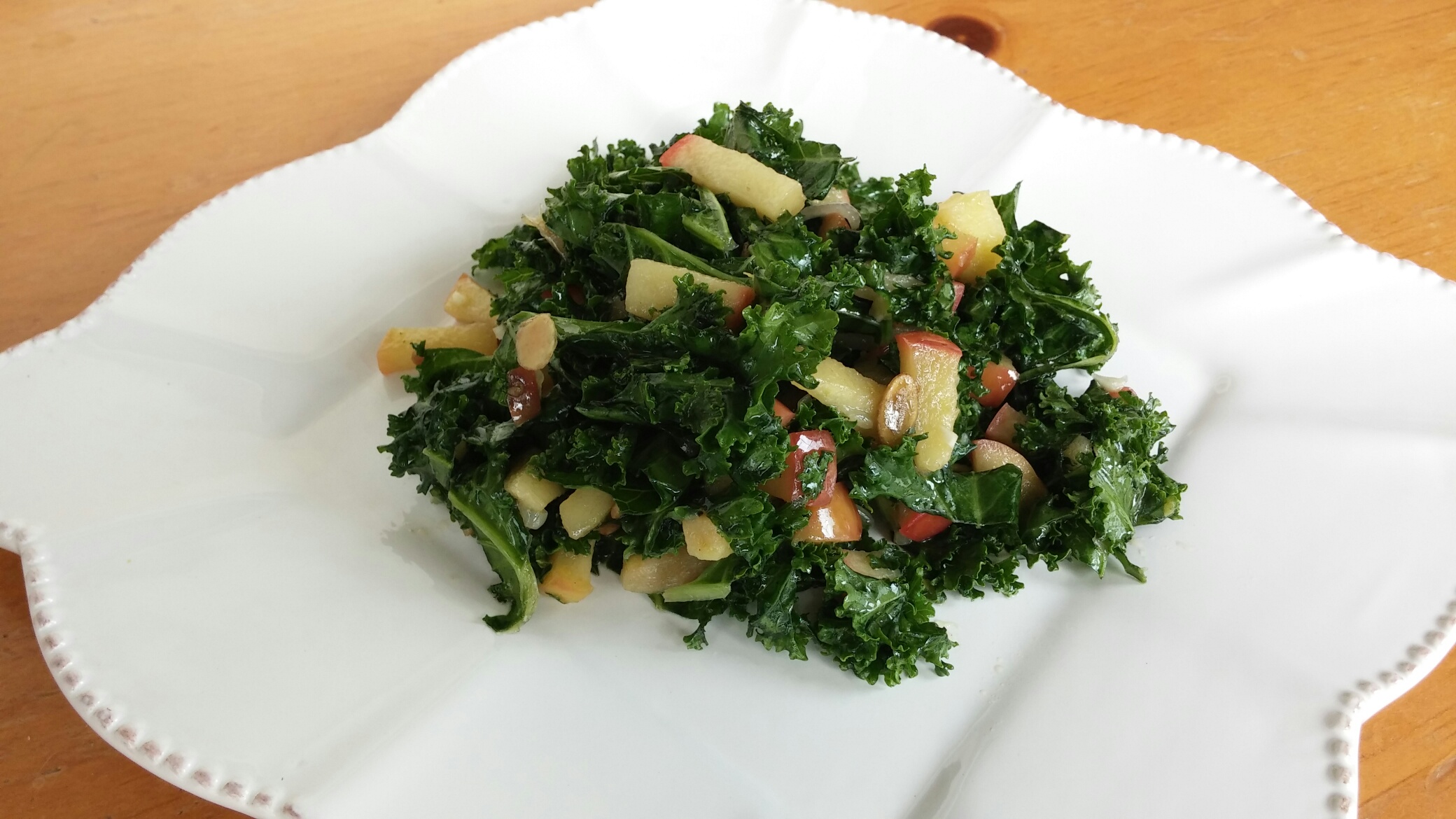
Kale Salad with Sauteed Apples

Kale is one of our favorite vegetables to grow. It has a long season and countless health benefits. We’ve tried many kale recipes and this is one of our favorites: Kale Salad with Sauteed Apples. This recipe also uses shallots, another veggie in your share this week, and would be great with some microgreens on top to add an extra crunch.

Swiss Chard can be used just like spinach and is a great substitute for any spinach recipe. It’s also great stir-fried. Here’s one interesting idea for chard and carrots. We haven’t tried this one, so let us know how you like it if you decide to try it.

We hope our CSA members have fun trying a few new things this week.   After the months of preparation, we’re excited to start the season and look forward to sharing a wonderful harvest in the spring and summer to come!  We welcome new members to join the CSA, where you’ll receive fresh local produce weekly delivered to your home or workplace, available throughout the greater Austin metropolitan area.

Posted in CSA/Farm Share, Recipes, Vegetables | Comments Off on Austin Area Spring CSA – Week 1